Vortex Motor
The 2026 search for the best Permanent Magnet Motors is no longer only about maximum efficiency. Global buyers must compare torque density, operating temperature, rare-earth exposure, service support, and verified lifetime costs. A motor may look impressive on a laboratory sheet, yet perform poorly in a dusty factory or unstable grid.
The International Energy Agency reported more than 17 million electric cars sold worldwide in 2024. It expects global electric-car sales to exceed 20 million in 2025. This growth strengthens demand for compact, efficient traction motors. The U.S. Department of Energy also estimates that motor-driven systems consume about 46% of global electricity. Small efficiency gains can therefore become large operating savings. Real savings depend on load profiles, inverter quality, cooling design, and maintenance discipline.
Jacek F. Gieras, a recognized permanent-magnet machine researcher and author, describes the technology through three practical advantages: “high efficiency, high power density, and high torque density.” That sentence is useful, but incomplete. It does not solve magnet demagnetization, supply-chain risk, or recycling challenges. Buyers should read test conditions carefully. Continuous torque is not peak torque. Rated efficiency is not always field efficiency.
This guide evaluates leading 2026 motor choices through documented performance, application fit, supplier credibility, and long-term risk. Sources include the IEA Global EV Outlook 2025, U.S. Department of Energy motor-system research, and established technical literature. The ranking may not suit every project. That is the point. A dependable motor begins with honest comparison, not impressive advertising.
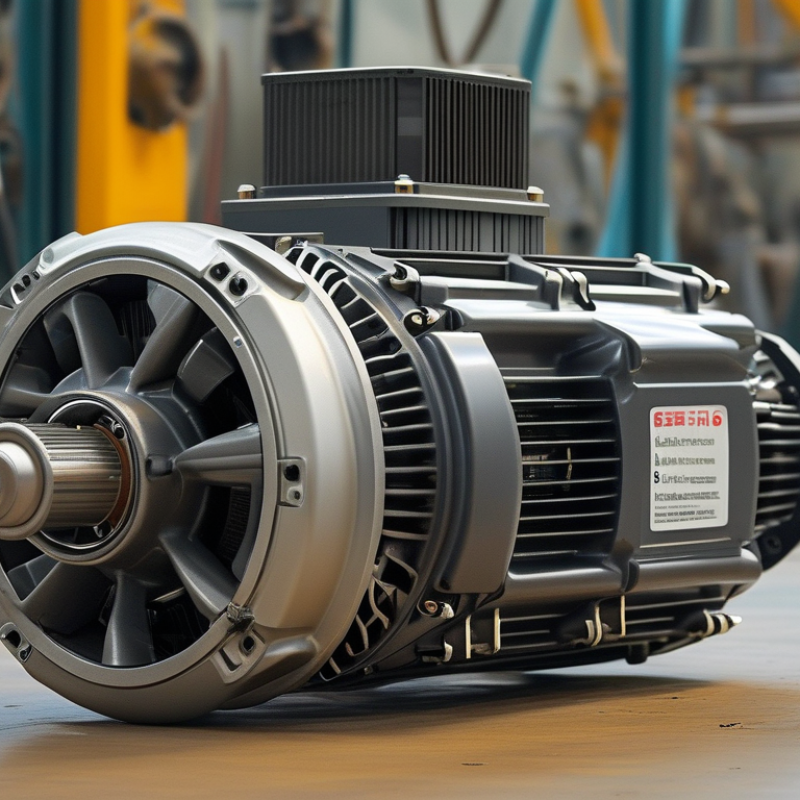
A permanent magnet motor converts electrical energy into rotation through magnetic interaction. Its rotor carries permanent magnets, while copper windings sit in the stationary stator. An inverter rapidly changes current direction and timing. This creates a rotating magnetic field that pulls the rotor forward.
The design removes most rotor copper losses. It can deliver strong torque from a compact frame. This matters in electric vehicles, pumps, compressors, and factory equipment. The International Energy Agency reported that electric car sales approached 14 million units in 2023. That growth increases demand for efficient traction motors. It also raises expectations for smaller, quieter drive systems.
Efficiency is not automatic.
A motor still needs correct control, cooling, and load matching. Excessive heat can weaken magnets, especially during repeated high-load operation. Rare-earth magnet materials may also create supply and recycling concerns. The U.S. Department of Energy has identified motor efficiency and material use as continuing research priorities. In practical testing, engineers should check temperature rise, starting torque, speed range, vibration, and inverter compatibility. A catalogue efficiency figure can mislead. Real installations rarely operate at one steady load. That is the part buyers often underestimate.
Which Permanent Magnet Motor Types Will Lead the 2026 Market?
In 2026, interior permanent magnet motors will likely lead demanding industrial and mobility applications. Their buried magnets support high torque density, strong efficiency, and useful field weakening at higher speeds. They also tolerate frequent acceleration better than many surface-mounted designs. However, complex rotor construction can increase manufacturing costs and complicate repair.
Surface permanent magnet motors should remain important in pumps, fans, compressors, and compact automation systems. Their simple magnetic layout supports smooth operation and easier production. Brushless DC motors will continue serving appliances, small vehicles, and battery-powered equipment. Axial-flux permanent magnet motors may grow quickly, but their supply chains and cooling methods still need wider validation.
Tips: Compare efficiency across the full duty cycle, not only at rated load. Check thermal limits, demagnetization resistance, insulation quality, and controller compatibility. Ask for test data aligned with IEC 60034 methods. Keep spare bearings and sensors available.
Global buyers should match motor type with speed range, overload demands, ambient temperature, and maintenance skills. IPMSM may offer the strongest overall performance, yet it is not automatically the best choice. Forecasts can be too confident. A lower-cost SPM or BLDC design may deliver better value when the application is stable and uncomplicated. Evaluate measured data, service support, and total ownership cost before selecting a 2026 platform.
Which permanent magnet motor types are positioned to lead the 2026 market?
PMSM and PM-assisted synchronous reluctance motors show the strongest efficiency profile for industrial drives, electric vehicles, HVAC systems, and renewable-energy equipment. BLDC motors remain attractive for compact, cost-sensitive applications, while PMDC motors are generally selected for simpler low-power systems. The ranges are indicative engineering benchmarks rather than market-share forecasts; actual performance depends on motor size, inverter design, cooling, duty cycle, and operating speed.
Permanent-magnet motors deserve careful comparison, not automatic approval. The IEA’s Energy-Efficiency Policy Opportunities report estimated motor-driven systems used 46% of global electricity. Even a small efficiency gap can increase factory energy costs. Compare efficiency at the actual load, not only at the rated point. A 30 kW motor may run below 60% load for much of its life. That changes the real result. Check the test method, ambient temperature, cooling method, and inverter settings. IEC 60034-2-1 provides a useful basis for measuring motor losses.
Torque should be tested across the complete speed range. High starting torque can reduce mechanical stress during conveyor acceleration. However, excessive peak torque may require a larger drive and stronger couplings. Speed matters too. A wide constant-power range can reduce gearbox size, but it may increase heat and control complexity. Watch the bearings and the rotor temperature. Cooling changes everything. The U.S. Department of Energy’s motor-system guidance emphasizes system-level savings, including controls, transmission, and operating schedules. A motor with excellent laboratory efficiency can perform poorly in a dusty, frequently cycling plant. I would request a duty-cycle simulation and a 24-hour trial measurement. Catalog figures are useful, but incomplete. Real operating data deserves more trust.
Efficiency should be measured across the real duty cycle, not only at the nameplate point. The International Energy Agency reports that electric motor systems consume roughly half of global electricity. Small efficiency losses become expensive when pumps, fans, or compressors run continuously. Request efficiency maps, power-factor data, overload limits, and inverter compatibility. IEC 60034-30-1 efficiency classes help comparison, but test conditions still matter. A laboratory result may not match a dusty factory floor.
Check thermal performance, insulation, bearing life, shaft tolerances, and enclosure protection for the target climate. Salt air, high altitude, and frequent starts can change the selection. Permanent magnets also require attention to demagnetization risk during overloads or high temperatures. The U.S. Department of Energy estimates motor-driven equipment uses about 70% of manufacturing electricity. That figure makes maintenance access and control quality financially important. A cheaper motor can become costly after one failed bearing.
Supply resilience deserves a practical review. The International Energy Agency’s Global Critical Minerals Outlook 2024 highlights concentrated refining capacity for several rare-earth materials used in permanent magnets. Ask about material specifications, traceability, replacement rotors, and local technical support. Do not accept vague lifetime claims. Some buyers focus too heavily on peak efficiency and overlook partial-load behavior. That is an understandable mistake. Yet operating records, not brochures, should guide the final decision.
Supplier evaluation should begin with evidence, not brochures. Ask for ISO 9001 records, production traceability, and IEC 60034-1 compliance. IEC 60034-2-1 also supports comparable efficiency testing. Request test data at rated load, partial load, temperature, and speed. A laboratory report without matching production serial numbers is weak evidence. The IEA’s Global Critical Minerals Outlook 2024 reported that China supplied about 94% of global sintered permanent magnets in 2023. This concentration makes magnet sourcing, price volatility, and export planning important. Buyers should check alternative material routes and documented supply continuity.
Tips: Compare total ownership cost, not only purchase price. Motor efficiency, inverter compatibility, cooling design, bearings, and service access affect long-term spending. The U.S. Department of Energy notes that motor-driven systems consume a major share of industrial electricity. Small efficiency losses can become large factory expenses. During supplier audits, inspect rotor balance records, insulation tests, corrosion protection, and spare-parts lead times. Ask for field failure data, but verify how failures were classified. Some suppliers report “zero defects” by excluding installation problems.
Long-term reliability needs realistic conditions. Test the motor under dust, humidity, voltage variation, frequent starts, and thermal cycling. A high efficiency label does not guarantee durable operation. It can hide weak cooling or fragile magnets. Buyers should also compare warranty terms, repair training, software access, and local technical support. No scorecard is perfect. Still, a transparent supplier usually welcomes difficult questions and provides repeatable evidence.
: Interior permanent magnet motors may lead demanding industrial and mobility applications. Their buried magnets provide high torque density and strong efficiency. They also support field weakening at higher speeds. The trade-off is a more complex rotor and higher repair costs.
Surface permanent magnet motors suit pumps, fans, compressors, and compact automation systems. Their simple rotor structure supports smooth operation and easier production. They may offer better value in stable applications. Simple can be enough.
Brushless DC motors will continue serving appliances, small vehicles, and battery-powered equipment. They fit compact systems with moderate power demands. Check controller compatibility before selection. Do not assume universal compatibility.
Axial-flux motors may expand in selected applications. However, their supply chains and cooling methods still need broader validation. Buyers should request thermal test results and production evidence. Growth forecasts may be too confident.
Compare efficiency across the complete duty cycle, not only at rated load. A 30-kilowatt motor may operate below 60% load for long periods. Partial-load performance can strongly affect factory energy costs. Catalog figures are incomplete.
Test torque across the full speed range. Check starting torque, constant-power range, rotor temperature, and bearing temperatures. Review cooling, inverter settings, ambient conditions, and test methods. A 24-hour trial can reveal unstable heating.
Request quality records, production traceability, efficiency reports, and serial-number-linked test data. Review results at rated load, partial load, different temperatures, and different speeds. Inspect rotor balance records, insulation tests, and corrosion protection. Brochures are not enough.
Test motors under dust, humidity, voltage variation, frequent starts, and thermal cycling. Compare warranty terms, repair training, software access, and spare-parts lead times. Keep spare bearings and sensors available. No scorecard is perfect.
Compare total ownership cost, not only the purchase price. Include electricity use, inverter compatibility, cooling, bearings, maintenance, and service access. A cheaper motor may deliver better value in uncomplicated equipment. I would verify that assumption with measured data.
This guide explains how Permanent Magnet Motors generate motion through magnetic fields produced by permanent magnets, eliminating the need for certain rotor windings and supporting high efficiency, compact design, and precise control. It reviews the motor types expected to shape the 2026 market, including solutions suited to industrial automation, electric mobility, renewable energy systems, and other demanding applications. Readers will learn how to compare efficiency, torque, speed range, thermal behavior, noise, control compatibility, and performance under continuous or variable loads.
For global buyers, selecting the right motor requires more than comparing rated power or purchase price. The guide highlights key checks such as application requirements, voltage, environmental protection, certifications, testing procedures, maintenance support, delivery capability, and customization options. It also presents a practical approach to evaluating suppliers, total ownership costs, warranty terms, technical documentation, quality consistency, and long-term reliability, helping buyers make informed decisions based on measurable performance and dependable service.
