10 Best Direct Current Motors for Global Buyers?

Time:2026-10-17 Author:Charlotte
0%

Choosing the right motor can determine whether a conveyor runs smoothly or overheats after a month. This guide examines ten Direct Current Motors for global buyers with different operating needs. It considers voltage, torque, speed control, efficiency, noise, cooling, and service life. A compact 12-volt motor may suit a medical device, while a high-torque 48-volt model may better support an automated cart. The correct choice depends on the complete system, not a single impressive specification.

Each motor should be reviewed through practical evidence. Buyers need clear datasheets, tested performance curves, duty-cycle information, and realistic delivery support. Brushed designs can offer simple control and lower initial cost. Brushless options usually provide longer service life and reduced maintenance, but their controllers add complexity. Protection ratings matter in workshops, warehouses, and outdoor equipment. An IP rating alone does not guarantee reliable operation in every climate. Temperature, dust, vibration, and load changes still require careful evaluation.

No ranking can fit every application. A motor performing well on a test bench may struggle during repeated starts, sudden braking, or continuous operation. Some supplier pages remain vague, which should encourage further questions rather than quick purchasing. Ask for samples, warranty terms, replacement parts, and compliance documents relevant to the destination market. Independent testing is valuable when safety or uptime matters. This comparison aims to support informed decisions, not replace engineering judgment. Small details often decide the result. A careful buyer checks the numbers twice, then tests the motor under actual working conditions.
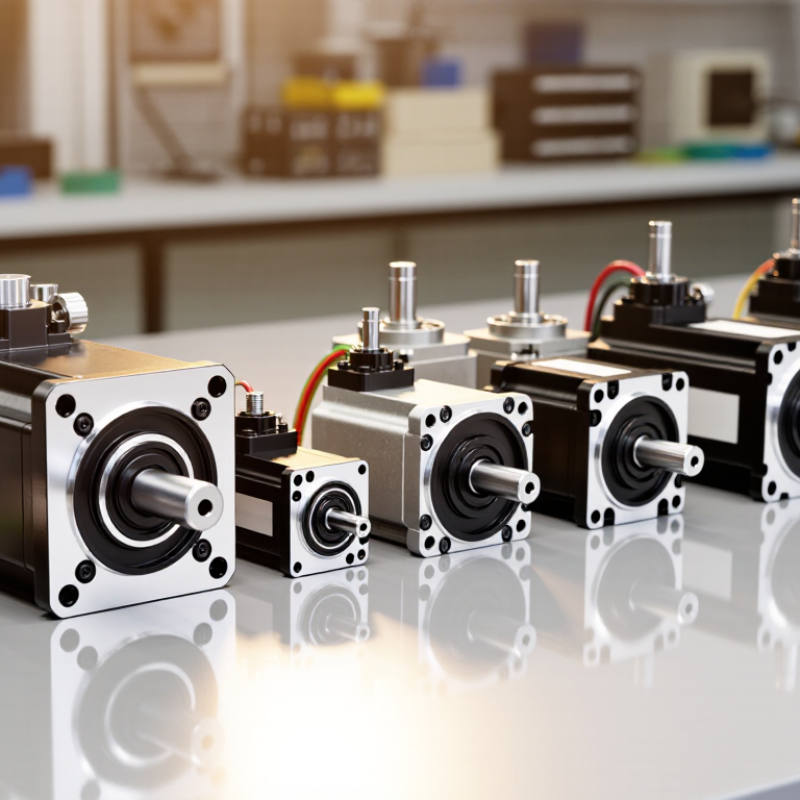
10 Best Direct Current Motors for Global Buyers?

DC Motor Types: Brushed, Brushless, Permanent-Magnet, and Series Designs

Choosing among the 10 best DC motors requires more than comparing speed and price. The International Energy Agency’s Energy Efficiency 2023 report states that electric motor systems consume over 50% of global electricity. Small efficiency differences matter. Brushed DC motors offer simple control and strong starting torque. Their brushes and commutators wear during daily operation. They suit light industrial tools, pumps, and compact machinery.

Brushless DC motors replace mechanical switching with electronic commutation. They usually provide longer service life, lower maintenance, and better efficiency. However, their controllers increase system cost and design complexity. Permanent-magnet motors create magnetic flux without continuous field current. This improves power density, but magnets can lose performance under excessive heat. The term also overlaps with many brushless designs. That distinction is often missed. Permanent-magnet does not automatically mean brushless.

Series-wound DC motors deliver exceptional starting torque because field and armature currents rise together. They can drive traction equipment, lifts, and heavy starting loads. Yet, operating a series motor without a suitable load can cause dangerous overspeed. IEC 60034 efficiency standards help buyers compare motor performance under defined test conditions. Still, published efficiency figures may not reflect dust, heat, voltage variation, or poor alignment. The U.S. Department of Energy’s Motor Systems Market Assessment reports that industrial motor systems represent a major share of manufacturing electricity use. My practical view is less tidy: the “best” motor depends on duty cycle, service access, controller quality, and failure consequences. A perfect catalog choice can perform poorly in a hot, poorly maintained enclosure.

Global Selection Criteria: Voltage, Torque, Speed, Duty Cycle, and IP Ratings

Choosing among the 10 best direct current motors requires more than comparing price and rated power. Voltage must match the control system and available supply. A 24-volt motor may suit mobile equipment, while industrial machinery often needs higher voltage for reduced current and cable losses. The International Energy Agency reports that electric motor systems consume about half of global electricity, making correct sizing commercially important.

Torque should be checked at startup, not only during continuous operation. A conveyor lifting 40 kilograms needs enough breakaway torque before reaching its operating speed. Speed ratings can also mislead. A motor reaching 3,000 rpm without load may slow sharply under load. Test torque-speed curves, controller limits, and gearbox ratios together. That shortcut fails.

Duty cycle describes real working conditions. S1 means continuous operation, while intermittent cycles allow cooling periods. Undersizing a motor for frequent starts can cause heat damage. IEC 60034 guidance supports evaluating thermal performance and efficiency under stated operating conditions. IP ratings, defined by IEC 60529, matter in dusty workshops and washdown areas. IP65 protects against dust and water jets, but not full immersion. Confirm the test conditions. I still see buyers selecting IP ratings from photographs, not site measurements. That is risky. A reliable specification should record voltage tolerance, peak torque, operating hours, ambient temperature, enclosure rating, and service access before purchase.

10 Best Direct Current Motors for Global Buyers

Global selection criteria: voltage, torque, speed, duty cycle, and IP rating

The chart compares representative continuous torque ratings across ten common DC motor configurations. Voltage, speed, duty cycle, and IP rating are included in the table to support global application matching. The values are typical engineering reference points rather than brand-specific product data; final selection should be verified against the manufacturer’s datasheet.

Motor Profile Voltage (VDC) Continuous Torque (Nm) Rated Speed (rpm) Duty Cycle IP Rating

Efficiency Benchmarks: IE3/IE4 Classes, Thermal Limits, and Energy Costs

10 Best Direct Current Motors for Global Buyers?

Efficiency benchmarks require more than a number on a datasheet. IE3 and IE4 classes mainly classify AC induction motors under IEC standards. They do not automatically define direct current motor performance. For DC systems, buyers should request measured motor efficiency, controller losses, brush or commutator losses, and operating-point data. A motor reaching 90% efficiency at full load may perform poorly at 40% load.

Thermal limits are equally important. Check the insulation class, permissible winding temperature, ambient rating, and duty cycle. A motor installed in a hot enclosure may lose its rated output. For example, restricted airflow, dust, and frequent starts can raise winding temperature quickly. Use temperature sensors during site testing. Short tests can mislead.

Energy cost depends on total input power, not motor output alone. A 10 kW motor operating 4,000 hours yearly at 0.90 efficiency consumes about 44,444 kWh for motor losses included. Improving system efficiency to 0.94 reduces consumption to roughly 42,553 kWh. The saving is about 1,891 kWh annually, before controller and maintenance costs. Electricity prices vary widely between countries, so calculate using the buyer’s local tariff. My caution is simple: laboratory efficiency can look excellent. Real installations are less tidy. Load variation, cooling failure, and poor calibration deserve equal attention.

10 Best Direct Current Motors for Global Buyers? - Efficiency Benchmarks: IE3/IE4 Classes, Thermal Limits, and Energy Costs

Rank Representative DC Motor Configuration Typical Application Rated Output Rated Voltage Nominal Speed Measured Efficiency IE3/IE4 Comparison Thermal Limit Recommended Duty Estimated Annual Energy Cost
1 Permanent-Magnet DC Motor Industrial conveyors, actuators, and battery-powered equipment 0.75 kW 180 V DC 3,000 rpm 89.5% IE4-range benchmark Insulation Class F; 155°C system limit; 40°C ambient reference S1 continuous US$503/year
2 Brushless DC Motor with Electronic Commutation Fans, pumps, robotics, and precision motion systems 1.50 kW 310 V DC bus 3,000 rpm 91.0% IE4-range benchmark Insulation Class F; 155°C system limit; 40°C ambient reference S1 continuous US$989/year
3 Separately Excited DC Motor Large hoists, test benches, rolling equipment, and controlled drives 5.50 kW 240 V DC armature 1,500 rpm 92.5% IE4-range benchmark Insulation Class H; 180°C system limit; 40°C ambient reference S1 continuous US$3,568/year
4 Shunt-Wound DC Motor Machine tools, constant-speed pumps, and industrial process lines 2.20 kW 220 V DC 1,500 rpm 88.5% IE3-range benchmark Insulation Class F; 155°C system limit; 40°C ambient reference S1 continuous US$1,492/year
5 High-Torque Permanent-Magnet DC Motor Packaging machines, indexing systems, and mobile equipment 3.70 kW 180 V DC 1,800 rpm 90.0% IE3-range benchmark Insulation Class F; 155°C system limit; 40°C ambient reference S1 or intermittent S3 US$2,467/year
6 Series-Wound DC Traction Motor Electric vehicles, cranes, locomotives, and high-starting-torque drives 15.00 kW 500 V DC 1,200 rpm 93.0% IE4-range benchmark Insulation Class H; 180°C system limit; 40°C ambient reference S2 or S3 intermittent duty US$9,677/year
7 Compact Ferrite-Magnet DC Motor Small pumps, valves, office equipment, and light automation 0.25 kW 24 V DC 1,800 rpm 82.0% Below IE3-range benchmark Insulation Class B; 130°C system limit; 40°C ambient reference S2 intermittent US$183/year
8 Separately Excited High-Speed DC Motor Spindles, laboratory equipment, printing machinery, and winders 7.50 kW 400 V DC armature 3,000 rpm 94.0% IE4-range benchmark Insulation Class H; 180°C system limit; 40°C ambient reference S1 continuous US$4,787/year
9 Compound-Wound DC Motor Elevators, presses, compressors, and variable-load machinery 11.00 kW 440 V DC 1,500 rpm 93.5% IE4-range benchmark Insulation Class H; 180°C system limit; 40°C ambient reference S1 continuous US$7,059/year
10 Miniature Precious-Metal Brush DC Motor Medical instruments, laboratory actuators, cameras, and small robotics 0.10 kW 24 V DC 4,000 rpm 78.0% Below IE3-range benchmark Insulation Class B; 130°C system limit; 40°C ambient reference S2 intermittent US$77/year
Benchmark assumptions: Annual energy cost is estimated using 4,000 operating hours per year, rated-load operation, and an electricity price of US$0.15/kWh. The calculation is based on output power divided by motor efficiency and excludes drive, controller, cabling, maintenance, and demand charges. IE3 and IE4 references are approximate efficiency comparisons only; IEC efficiency classes are primarily defined for applicable AC motor categories, while DC motors should be evaluated using measured efficiency, duty cycle, cooling method, and the applicable product standard. Thermal values refer to insulation-system limits and do not replace the manufacturer’s allowable temperature-rise or overload data.

The 10 Best DC Motors Compared by Power, Reliability, and Applications

The ten best DC motors depend on power, reliability, and working conditions, not popularity. The IEA’s Energy Efficiency 2017 report estimates that electric motor systems consume roughly half of global electricity. That makes motor selection an operating-cost decision.

For compact devices, the permanent-magnet brushed motor remains practical and inexpensive. A coreless motor offers fast response in medical pumps and portable tools. Geared DC motors trade speed for torque, helping conveyors and small lifting systems. Series-wound motors deliver strong starting torque for traction equipment. Shunt-wound motors provide steadier speed under changing loads. Compound-wound designs balance both strengths, although their controls are less simple. Brushless DC motors reduce brush wear and suit fans, robots, and electric mobility. DC servo motors provide accurate positioning in automation. Iron-core brushed motors handle higher continuous loads. Linear DC actuators convert rotation into controlled movement for valves and adjustable mechanisms.

The U.S. Department of Energy’s 2021 Motor Systems Market Assessment links motor-driven equipment with a major share of industrial electricity use. Reliability therefore starts with duty-cycle analysis. Check starting current, thermal rise, gearbox load, dust, vibration, and maintenance access. Brushless designs often last longer, but their electronic controllers add failure points and cost. Brushed motors are easier to repair, yet carbon dust and commutator wear cannot be ignored. No ranking survives every application. I would also question catalog efficiency figures when testing uses ideal conditions rather than real load cycles. A motor that looks powerful on paper may overheat inside a sealed cabinet.

Compliance Guide: IEC 60034, NEMA Standards, CE Marking, and Global Sourcing

For global buyers comparing ten direct current motors, compliance should guide the shortlist, not decorate it. IEC 60034 helps assess ratings, temperature rise, efficiency, insulation, and testing. Check whether the supplier states the exact applicable parts of the standard. A general reference is not enough.

NEMA standards may matter when the motor must fit North American dimensions, mounting patterns, or performance expectations. Confirm shaft size, flange details, enclosure type, and terminal layout against the drawing. Small differences can delay installation. Very quickly.

CE marking requires careful verification. It indicates conformity with applicable European requirements, but it is not a universal quality certificate. Request the Declaration of Conformity, technical file references, risk assessment, and test evidence. Check that the documents match the actual motor, voltage, controller, and intended environment.

Reliable sourcing depends on traceable details. Ask for serial-number records, routine test reports, insulation resistance results, and sample approval procedures. A factory audit can reveal poor storage, loose wiring, or inconsistent labeling. I have learned that attractive paperwork may hide a changed component. That deserves scrutiny.

For each candidate, record rated voltage, current, speed, duty cycle, braking method, IP rating, ambient temperature, and spare-part availability. Include freight packaging and after-sales response in the evaluation. A technically compliant motor can still become an expensive choice when documentation, replacement brushes, or regional service are overlooked.

FAQS

How should I choose the motor voltage?

Match the motor voltage with the control system and available power supply. A 24-volt motor may suit mobile equipment. Industrial machines may use higher voltage to reduce current and cable losses. Check voltage tolerance before purchasing. A mismatch can stop the system.

Why must starting torque be checked?

Starting torque helps the motor move a load from rest. A conveyor lifting 40 kilograms needs enough breakaway torque. Continuous torque alone may look sufficient. That shortcut fails. Review the torque-speed curve under real load conditions.

Can the published speed rating be trusted?

No-load speed can be much higher than loaded speed. A motor rated near 3,000 rpm may slow sharply during operation. Compare motor speed, load torque, controller limits, and gearbox ratio. Test the complete drive system when possible. Numbers can mislead.

What does duty cycle mean?

Duty cycle describes how long the motor runs and rests. Continuous operation creates different heat conditions from intermittent use. Frequent starts can overheat an undersized motor. Record operating hours, starts per hour, and cooling periods. Heat matters.

Which enclosure rating suits dusty or wet areas?

Choose the enclosure rating from actual site conditions. A dust-tight, water-jet-resistant enclosure may suit a washdown area. It does not automatically support full immersion. Confirm the test conditions and water direction. Photos are not measurements.

What compliance documents should a supplier provide?

Request the exact standards used for ratings, insulation, temperature rise, and testing. Ask for routine test reports and insulation resistance results. For European use, request conformity documents and risk assessment records. The documents should match the motor, controller, voltage, and environment. Paperwork can be incomplete.

Which mechanical details should I verify before installation?

Compare shaft size, flange dimensions, mounting holes, enclosure type, and terminal layout. Small differences can delay installation. Request a current technical drawing. Do not rely on an old sample. Measure twice.

What sourcing details are easy to overlook?

Check serial-number records, replacement brush availability, service access, and regional support. Include packaging, freight protection, and response times in the evaluation. A compliant motor may still become expensive after installation. I sometimes underestimate service delays. That deserves review.

Conclusion

This guide compares 10 of the best Direct Current Motors for global buyers, covering brushed, brushless, permanent-magnet, and series-wound designs. It explains how each motor type performs in different operating environments and helps readers evaluate essential specifications, including voltage, torque, speed, duty cycle, thermal limits, and IP protection ratings. The comparison focuses on power output, reliability, maintenance needs, efficiency, and suitability for industrial equipment, automation, transportation, and other demanding applications.

The article also discusses efficiency benchmarks such as IE3 and IE4 classifications, energy consumption, and the long-term impact of heat management on operating costs. A practical compliance section introduces key considerations related to IEC 60034, NEMA standards, CE marking, documentation, and international sourcing. By combining technical performance with safety, lifecycle value, and regulatory awareness, this overview supports more informed motor selection for projects in diverse global markets.

Charlotte

Charlotte

Charlotte is a seasoned marketing professional with a deep understanding of the company's portfolio and a passion for elevating its presence in the market. With a keen eye for detail and a commitment to excellence, she ensures that our professional blog is regularly updated with insightful articles......