Brushless Gear Motors are becoming essential wherever compact torque, controlled speed, and long service life matter. They combine a brushless DC motor with a reduction gearbox, producing steady output in robotics, conveyors, medical equipment, automated doors, and precision machinery. The difference is tangible: fewer mechanical contacts, quieter operation, and less routine maintenance.
Industry data supports this momentum. Grand View Research estimates that the global brushless DC motor market was worth approximately USD 19 billion in 2023, with continued growth expected through 2030. MarketsandMarkets also identifies automation, electric mobility, and industrial equipment as major demand drivers. These figures describe a broad motor market, not gear motors alone. That distinction matters.
Thomas A. Lipo, a widely cited motor-drive specialist, describes the technology this way: “The brushless DC motor is essentially a permanent-magnet synchronous motor supplied by an inverter.” His explanation highlights an important selection issue. Electronics, gearing, and load conditions must work together.
This article introduces the China Top 10 Brushless Gear Motors by examining torque density, gear ratio, rated voltage, efficiency, noise, thermal performance, protection rating, customization, and after-sales support. Product rankings are never flawless. A compact motor may suit a laboratory actuator but fail under continuous conveyor duty. A low-cost model may also demand tighter quality checks.
The comparison therefore focuses on usable evidence, including manufacturer specifications, testing details, certifications, and application experience. Buyers should verify every critical figure under real operating conditions. Numbers alone can mislead.
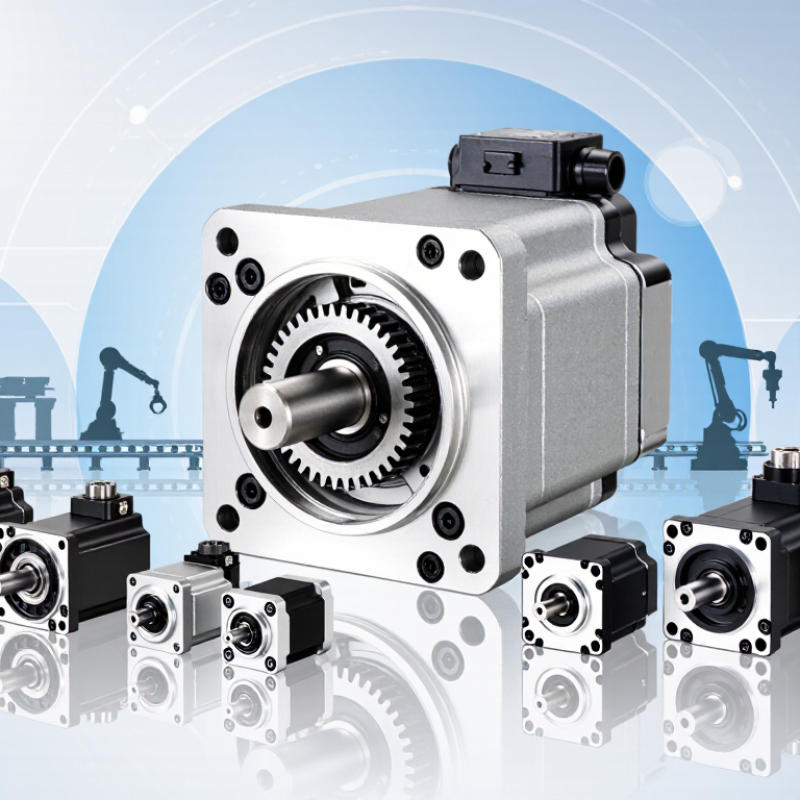
What Are Brushless Gear Motors and How Do They Work?
Brushless gear motors combine a brushless DC motor with a mechanical gearbox. The motor uses permanent magnets on its rotor and copper windings on its stator. An electronic controller switches current through these windings. This creates a rotating magnetic field and turns the rotor without physical brushes.
No brushes means less friction and fewer wear particles. That can support longer service life in clean, continuous-duty equipment. However, the motor still needs a suitable controller. Sensor-based systems use Hall sensors to detect rotor position. Sensorless systems estimate position from electrical signals. Sensorless control can be less reliable at very low speeds. That detail is often overlooked.
The gearbox changes the motor’s speed and torque. A spur gearbox is compact and economical. A planetary gearbox usually offers high torque density and better load distribution. A worm gearbox can provide strong reduction, but it may lose more energy through friction. In practical testing, noise, heat, backlash, and startup load matter as much as rated power. A motor that looks efficient on paper may perform poorly with an undersized controller or poor cooling.
When comparing China’s top ten brushless gear motor options, check voltage, continuous torque, peak torque, reduction ratio, duty cycle, shaft load, and protection rating. Ask for test data under real operating conditions. Catalog figures alone are not enough. I would also verify connector quality and gearbox lubrication, because small details often decide field reliability.
Why Are Chinese Brushless Gear Motors Widely Used?
What Are the China Top 10 Brushless Gear Motors?
Chinese brushless gear motors are widely used because they combine compact design, steady torque, and competitive production costs. In industrial equipment, this combination reduces space and simplifies mechanical layouts. A typical motor can drive conveyor rollers, robotic joints, pumps, or automated shutters. Its electronic commutation also reduces brush wear and routine maintenance.
Chinese manufacturers offer many gear ratios, shaft designs, voltage options, and mounting patterns. This flexibility helps engineers match motors to different loads and operating speeds. High-volume production supports consistent machining and faster customization. Many suppliers also provide torque curves, thermal data, noise measurements, and life-test reports. These documents help buyers compare performance beyond simple price claims. Still, documentation quality varies.
The most reliable selection process checks rated torque, peak load, duty cycle, backlash, efficiency, and protection rating. Engineers should also test the motor under real temperature and vibration conditions. A motor may perform well on a bench but struggle inside a dusty machine. That assumption can fail. Some low-cost models use weaker bearings or less precise gears, creating noise after extended operation. Experienced buyers request samples, inspect test records, and verify production consistency before placing larger orders. This practical approach explains why the leading ten categories remain popular across automation, medical equipment, office systems, and small mobility devices.
What Are the China Top 10 Brushless Gear Motors? - Why Are Chinese Brushless Gear Motors Widely Used?
| Rank |
Representative Brushless Gear Motor Configuration |
Typical Voltage |
Typical Output Power |
Gearbox Type |
Common Reduction Ratio |
Typical Output Torque |
Typical Output Speed |
Typical Protection |
Common Applications |
Why It Is Widely Used |
| 1 |
24 V Compact Planetary Brushless Gear Motor |
12–48 V DC |
50–400 W |
Planetary |
3:1–100:1 |
1–25 N·m |
30–1,000 rpm |
IP54–IP65 |
AGVs, mobile robots, automated handling equipment |
High torque density, compact size, low backlash options, and good overload capability. |
| 2 |
24 V Spur Brushless Gear Motor |
12–36 V DC |
20–250 W |
Spur |
5:1–300:1 |
0.3–15 N·m |
20–800 rpm |
IP40–IP65 |
Conveyors, vending machines, access-control systems, small automation |
Simple construction, low cost, easy installation, and broad availability in standard frame sizes. |
| 3 |
48 V Helical Brushless Gear Motor |
24–72 V DC |
200 W–2 kW |
Helical |
5:1–100:1 |
5–120 N·m |
30–600 rpm |
IP54–IP66 |
Industrial conveyors, packaging machinery, warehouse equipment |
Higher transmission efficiency and smoother, quieter operation than basic spur gearing. |
| 4 |
24 V Worm Brushless Gear Motor |
12–48 V DC |
30–750 W |
Worm |
10:1–100:1 |
2–80 N·m |
10–250 rpm |
IP44–IP65 |
Gates, lifting devices, compact actuators, adjustment mechanisms |
Provides high reduction ratios, right-angle installation, and useful holding characteristics. |
| 5 |
48 V Right-Angle Brushless Gear Motor |
24–72 V DC |
100 W–1.5 kW |
Bevel or worm |
5:1–80:1 |
3–100 N·m |
20–700 rpm |
IP54–IP66 |
Compact conveyors, medical equipment, inspection systems, mobile platforms |
Changes the drive direction by 90 degrees and helps reduce machine installation space. |
| 6 |
12 V Micro Brushless Gear Motor |
6–24 V DC |
3–60 W |
Spur or planetary |
10:1–500:1 |
0.02–2 N·m |
5–600 rpm |
IP40–IP65 |
Office automation, laboratory equipment, small pumps, smart devices |
Small diameter, low energy consumption, low maintenance, and compatibility with battery systems. |
| 7 |
Brushless Gear Motor with Incremental Encoder |
12–48 V DC |
30–750 W |
Planetary or spur |
5:1–200:1 |
0.5–40 N·m |
10–1,000 rpm |
IP54–IP65 |
Robotic joints, positioning systems, dispensers, automated guided vehicles |
Closed-loop feedback improves speed regulation, positioning accuracy, and stall protection. |
| 8 |
Hollow-Shaft Brushless Gear Motor |
24–72 V DC |
100 W–2 kW |
Helical or planetary |
5:1–100:1 |
3–120 N·m |
20–600 rpm |
IP54–IP66 |
Rollers, rotary tables, indexing equipment, compact transmission systems |
Simplifies coupling, reduces external components, and supports space-saving machine layouts. |
| 9 |
Water-Resistant Brushless Gear Motor |
12–48 V DC |
50–1,000 W |
Planetary, helical, or worm |
5:1–150:1 |
1–80 N·m |
15–700 rpm |
IP65–IP67 |
Outdoor automation, cleaning equipment, agricultural machinery, marine accessories |
Sealed construction protects against dust and water exposure in demanding operating environments. |
| 10 |
High-Torque Low-Speed Brushless Gear Motor |
24–96 V DC |
500 W–3 kW |
Planetary or helical |
10:1–200:1 |
30–300 N·m |
5–150 rpm |
IP54–IP67 |
Electric vehicles, powered carts, lifting platforms, heavy-duty mobile equipment |
Delivers strong starting torque, efficient speed control, and reliable performance under variable loads. |
Note: The specifications above are representative market ranges for commonly supplied brushless gear motor configurations in China. Actual performance depends on motor size, winding design, gearbox materials, duty cycle, cooling conditions, controller settings, and load requirements.
How to Evaluate the Top 10 Chinese Brushless Gear Motors?
Evaluating the China top 10 brushless gear motors requires more than comparing prices. I examine rated torque, speed range, gear ratio, efficiency, and continuous operating temperature. The motor should start smoothly under real load, not only on a laboratory bench. A clear datasheet matters, but it cannot replace sample testing. I usually request several units and record current draw, noise, vibration, and temperature after two hours.
Mechanical details often separate a reliable motor from an attractive specification. I check shaft play, mounting accuracy, gearbox backlash, connector quality, and seal protection. For compact equipment, a few millimeters of misalignment can create visible vibration. I also compare the encoder response, braking behavior, and speed stability at low voltage. IP ratings and insulation data should match the intended working environment.
Supplier evaluation deserves equal attention. I review production records, inspection methods, traceability, warranty terms, and the availability of replacement parts. Independent testing can verify torque and thermal claims. A factory video is useful, but limited. I once treated low noise as proof of quality; later testing showed excessive heat behind the quiet housing. That mistake changed my process. I now test motors during repeated starts, sudden load changes, and longer duty cycles. The strongest candidates are not simply the fastest or cheapest. They provide consistent results, credible documentation, and measurable performance across batches.
What Are the China Top 10 Brushless Gear Motors?
How to Evaluate the Top 10 Chinese Brushless Gear Motors
There is no universal “top 10” ranking because the best brushless gear motor depends on torque, speed, duty cycle, voltage, gearbox type, noise requirements, and application conditions. The chart presents a practical 100-point evaluation framework for comparing ten shortlisted Chinese brushless gear motors without using company or brand data.
For a fair comparison, test each shortlisted motor under the same voltage, load, speed, ambient temperature, and duty cycle. Verify rated torque and speed from the datasheet, check gearbox backlash and service life, confirm controller compatibility, and request evidence such as efficiency curves, thermal limits, noise measurements, dimensional drawings, and quality-control documentation.
Top 10 Chinese Brushless Gear Motors by Performance and Application
China’s brushless gear motor market covers ten practical application leaders: medical pumps, laboratory automation, AGV wheels, warehouse conveyors, robotic joints, camera gimbals, HVAC dampers, packaging machines, solar trackers, and compact mobility systems. These applications demand different priorities. A pump needs quiet rotation and stable flow. An AGV needs high starting torque, braking control, and thermal resistance. A robotic joint needs low backlash. There is no universal winner.
Grand View Research valued the global brushless DC motor market at approximately USD 17.3 billion in 2023. Its forecast indicates an 8.2% compound annual growth rate from 2024 to 2030. The International Energy Agency reports that motor-driven systems consume more than 40% of global electricity. Therefore, efficiency deserves equal attention beside purchase price. Chinese suppliers increasingly offer 12V, 24V, and 48V configurations, planetary or helical gearboxes, encoders, and IP-rated housings. Typical evaluation points include continuous torque, peak torque, gearbox efficiency, noise, backlash, and service life.
Performance figures still require careful checking. Some catalog values describe short-duration laboratory tests, not continuous factory operation. That difference matters. A 60-rpm motor may overheat inside a sealed enclosure, especially above 40°C. Ask for duty-cycle curves, winding-temperature data, noise measurements, and endurance results. Certification documents also need verification for the target market. In practice, the best Chinese brushless gear motor is the one matched to load cycles, installation space, control feedback, and maintenance conditions—not simply the one with the highest advertised torque.
How to Choose the Right Brushless Gear Motor for Your Project?
What Are the China Top 10 Brushless Gear Motors?
How to Choose the Right Brushless Gear Motor for Your Project?
Choosing a brushless gear motor requires more than comparing rated torque. China’s leading suppliers offer compact planetary, worm, spur, and helical designs for automation, robotics, medical devices, and intelligent equipment. Fortune Business Insights reported that the global brushless DC motor market reached approximately USD 19.83 billion in 2023. Its projected growth reflects rising demand for efficient, controllable motion systems.
Start with the load.
Calculate continuous torque, peak torque, output speed, and duty cycle separately. A motor delivering 2 N·m continuously may not survive repeated 4 N·m acceleration. Add a practical safety margin, often 20% to 30%, but avoid excessive oversizing. Oversized motors can waste energy and reduce control sensitivity. Grand View Research has reported steady growth in the global gear motors market, driven partly by factory automation and energy-efficiency requirements.
Check gearbox backlash, transmission efficiency, shaft loading, noise, and thermal behavior. Planetary gears suit high torque and precise positioning, while worm gears provide compact reduction but may lose more energy. Ask for measured efficiency curves, encoder accuracy, insulation data, and endurance-test conditions. Datasheets can look complete.
They sometimes hide the difficult details.
Confirm voltage tolerance, controller compatibility, mounting dimensions, ingress protection, and replacement availability. A prototype may run smoothly for ten minutes, then overheat inside a sealed enclosure. Testing the complete assembly under real load is more reliable than trusting catalog figures alone.
FAQS
They combine compact size, steady torque, flexible designs, and competitive production costs. They fit conveyors, pumps, robotic joints, and automated shutters. Maintenance is lower. Electronic commutation reduces brush wear.
Compare rated torque, peak load, speed range, gear ratio, efficiency, and duty cycle. Check the operating temperature and protection rating. A motor may meet speed targets but fail under continuous load.
Datasheets provide useful information, but samples reveal actual behavior. Run several motors under real loads. Record current, noise, vibration, and temperature after two hours. Bench results can mislead.
Test repeated starts, sudden load changes, low-voltage operation, and longer duty cycles. Watch for unstable speed or rising temperature. Test it longer. A quiet motor can still overheat inside its housing.
Check shaft play, mounting accuracy, gearbox backlash, connector quality, and seal protection. Even a few millimeters of misalignment can create visible vibration. Precise gears and stronger bearings usually support smoother long-term operation.
No. The protection rating must match dust, moisture, temperature, and vibration conditions. Also review insulation data and sealing quality. A suitable rating does not remove the need for environmental testing.
Review inspection methods, production records, traceability, warranty terms, and replacement-part availability. Ask for torque curves, thermal data, noise measurements, and life-test reports. Factory videos help, but they prove little alone.
Not usually. Lower prices may involve weaker bearings, less precise gears, or inconsistent production. Noise can appear after extended operation. I once treated low noise as proof of quality. Later testing showed excessive heat.
Conclusion
This article explains what Brushless Gear Motors are, how their brushless design and integrated gearing work together, and why they are increasingly used in automation, robotics, medical equipment, electric mobility, and other precision applications. It examines the advantages of Chinese brushless gear motors, including cost efficiency, flexible customization, compact construction, reliable performance, and broad manufacturing capabilities. The article also introduces practical criteria for evaluating the top 10 Chinese brushless gear motors, such as torque, speed range, efficiency, noise, durability, control compatibility, thermal performance, and overall value.
Based on performance and application requirements, the top 10 options are compared across different operating conditions, from high-precision motion control to continuous-duty industrial systems. The final section provides a clear selection framework, helping readers match motor voltage, gear ratio, output torque, installation size, feedback system, and environmental protection level with their project needs. This approach enables informed decisions based on technical suitability, reliability, lifecycle cost, and application-specific priorities.
 Vortex Motor
