What Is a High Speed Motor and How Does It Work?

Time:2026-10-12 Author:Liam
0%

What Is a High Speed Motor and How Does It Work? This question reaches beyond rotational speed. High Speed Motors are carefully engineered systems that convert electrical energy into rapid, controlled mechanical motion. Unlike ordinary motors, they may operate at tens of thousands of revolutions per minute. A small rotor can spin inside a compact housing, driving compressors, pumps, spindles, or turbine equipment.

Professor Ion Boldea, a recognized electric-machine researcher and author, states, “High-speed motors are not simply conventional motors operated faster; every design choice becomes more demanding.” This observation explains the engineering challenge clearly. Higher speed increases centrifugal forces, heat, vibration, windage loss, and bearing stress. Engineers therefore balance rotor strength, electromagnetic efficiency, cooling, insulation, and control accuracy. A shaft only a few centimeters wide may experience enormous mechanical loading. Even a slight imbalance can create noticeable vibration.

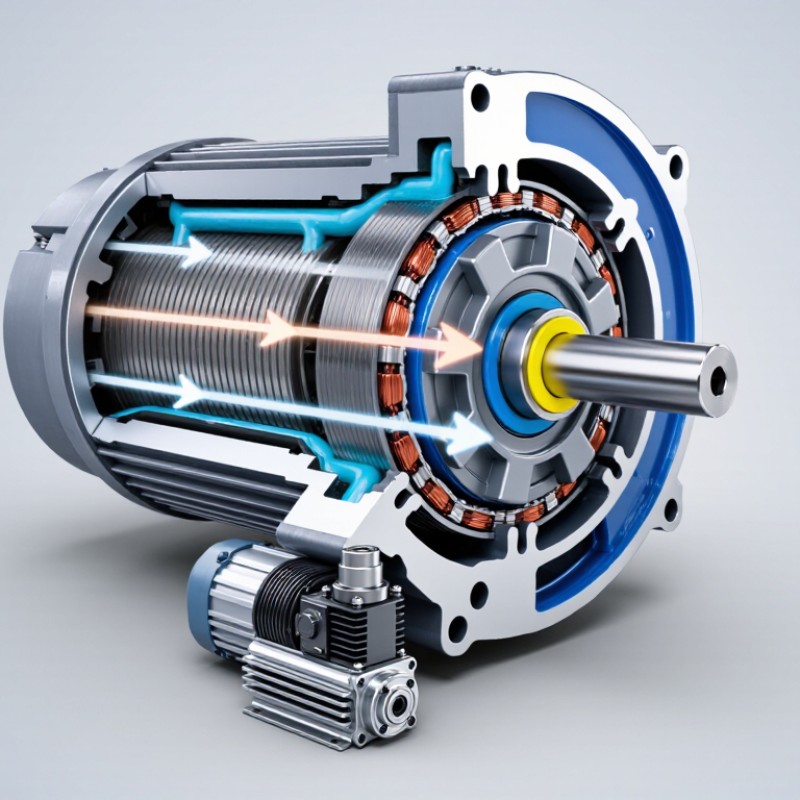
The working principle remains familiar. Electric current produces a rotating magnetic field in the stator. That field interacts with the rotor and creates torque. The difference lies in precision. High-frequency drives regulate switching, speed, and load response within very short time intervals. Air or liquid cooling may remove heat from the motor body. Ceramic bearings, magnetic bearings, or advanced lubricants can reduce friction.

Yet the picture is not perfect. More speed does not always mean better performance. Efficiency can fall when losses rise too quickly. Designers must accept compromises. This guide examines the motor’s structure, operating process, advantages, limitations, and practical selection factors. The details matter.
What Is a High Speed Motor and How Does It Work?

What Defines a High-Speed Motor?

What Defines a High-Speed Motor?

A high-speed motor is defined by more than its revolutions per minute. There is no universal speed threshold for every motor design. In practice, engineers compare speed with motor size, pole count, torque, and operating conditions. A compact motor running above 10,000 rpm may be considered high-speed, while larger industrial machines can reach this range with different design challenges. IEC 60034 standards focus on performance, safety, and testing, rather than creating one global high-speed limit.

High rotational speed increases power density. It can also create serious heat, vibration, and bearing stress. The rotor must remain balanced within extremely small tolerances. Cooling channels, insulation systems, and variable-frequency drives become important. According to the International Energy Agency, electric motor systems consume roughly half of global electricity. Even small efficiency improvements can therefore produce significant energy savings. The U.S. Department of Energy reports that motor-driven equipment can represent about 50% to 70% of industrial electricity use. These figures explain the interest in faster, more efficient designs, although higher speed does not automatically mean better performance. That assumption deserves review.

Tips: Check the rated speed, continuous-duty temperature, bearing type, and vibration limits. Ask for test data at the actual load, not only the maximum unloaded speed. A motor may look impressive on paper, yet perform poorly under heat and constant acceleration.

What Defines a High-Speed Motor?

Motor speed is primarily determined by supply frequency and the number of magnetic poles. The synchronous-speed formula is n = 120f / p, where n is speed in revolutions per minute, f is frequency in hertz, and p is the number of poles. In practice, induction motors operate slightly below synchronous speed because of slip. High-speed motors typically operate above conventional line-frequency motor speeds and may require specialized bearings, balancing, cooling, and drive controls.

Key Components Inside a High-Speed Motor

What Is a High Speed Motor and How Does It Work?

Key Components Inside a High-Speed Motor

A high-speed motor converts electrical energy into rapid rotational motion. Its stator creates a rotating magnetic field, while the rotor follows that field inside a narrow air gap. An inverter controls frequency and voltage, allowing precise speed adjustment.

This matters because the International Energy Agency reports that electric motor systems consume about 46% of global electricity. Even small efficiency gains can therefore reduce substantial energy use.

The rotor is usually balanced with exceptional accuracy. At high speed, a tiny mass error can create serious vibration. High-quality bearings support the shaft, while cooling channels remove heat from copper windings, bearings, and the rotor surface. Some designs use air cooling; others use liquid jackets. The housing must remain rigid, but excessive weight can reduce efficiency. That trade-off is easy to underestimate.

Sensors monitor temperature, vibration, position, and current. Control software uses these signals to prevent overspeed and thermal damage. The U.S. Department of Energy’s motor systems assessments also identify motor-driven equipment as a major share of industrial electricity demand. However, published efficiency figures may not reflect real operating conditions. Misalignment, dirty cooling passages, or poor lubrication can change performance quickly. A laboratory result is not always a factory result.

How a High-Speed Motor Produces Motion

A high-speed motor converts electrical energy into controlled mechanical motion through electromagnetic force. When current enters the stator windings, it creates a rotating magnetic field. This field pulls and pushes the rotor, causing it to spin. The rotor may reach thousands of revolutions per minute, depending on the motor design and operating conditions.

The process depends on precise timing. An electronic controller adjusts current through the windings, while position sensors or calculated feedback track rotor movement. This coordination keeps torque available as speed rises. The motor shaft then transfers rotation to a fan, pump, compressor, or precision tool. In practical testing, technicians monitor vibration, temperature, current, and sound. A small imbalance can become serious at high speed.

Heat and friction remain difficult problems. Bearings must support rapid rotation without excessive resistance, and airflow or liquid cooling may remove heat from the windings. Protective controls can reduce power when temperature or speed exceeds safe limits. No design is perfect. Even a carefully balanced rotor may produce unwanted vibration after long use. Regular inspection matters, especially around bearings, mounting points, and electrical connections. High speed creates motion quickly, but reliable motion requires careful control.

Methods for Controlling Speed and Performance

What Is a High Speed Motor and How Does It Work?

A high speed motor produces rotation far above standard industrial motor speeds. Its rotor must remain precisely balanced, because a small imbalance can create noticeable vibration. In practical testing, engineers monitor shaft temperature, bearing noise, vibration, and current during acceleration. These details often reveal problems before visible damage appears.

Methods for Controlling Speed and Performance

A variable frequency drive controls speed by adjusting the electrical frequency supplied to the motor. Voltage changes with frequency to maintain suitable magnetic flux. Vector control offers tighter torque control, especially when the load changes suddenly. An encoder can provide rotor position feedback, while sensorless control estimates position from electrical signals. Both methods have advantages. Sensorless systems are simpler, but they may respond less accurately at very low speeds.

Acceleration ramps prevent sudden mechanical stress. Current limits protect the windings during heavy starts. Field weakening can increase speed beyond the motor’s base rating, although available torque decreases. Cooling also matters. Airflow, liquid jackets, and carefully selected bearings help manage heat at high rotational speeds. A motor may run smoothly in an unloaded test yet behave differently under cutting, pumping, or compression loads. That difference deserves attention. I have found that conservative settings often improve reliability, even when they reduce peak performance slightly. Performance calculations can look perfect on paper, but installation conditions still need measurement.

What Is a High Speed Motor and How Does It Work? - Methods for Controlling Speed and Performance

Motor Type Typical High-Speed Range How It Produces Torque Common Speed-Control Method Performance Advantages Main Technical Challenges Typical Applications
High-Speed Induction Motor 3,000–30,000 rpm, depending on pole count, frequency, and design A rotating magnetic field induces current in the rotor, creating electromagnetic torque without electrical rotor connections. Variable-frequency drive using adjustable frequency and voltage; field-oriented control can improve torque response. Robust construction, simple rotor design, and good tolerance to demanding industrial environments. Rotor losses, heat generation, slip, bearing stress, and reduced efficiency at very high operating speeds. Compressors, pumps, fans, machine tools, and industrial process equipment.
Permanent-Magnet Synchronous Motor 3,000–60,000 rpm in specialized high-speed designs Permanent magnets on or inside the rotor interact with the stator’s rotating magnetic field. Inverter-based vector control with rotor-position feedback or sensorless estimation. High power density, high efficiency, and strong torque-to-weight ratio. Magnet temperature limits, demagnetization risk, rotor mechanical stress, and the need for precise control. Electric compressors, turbochargers, high-speed spindles, and compact power systems.
Switched Reluctance Motor 5,000–50,000 rpm in high-speed applications The rotor moves toward positions of minimum magnetic reluctance as stator phases are electronically energized. Current-controlled switching based on rotor position, speed, and torque demand. Simple and mechanically strong rotor, high-temperature capability, and reduced risk of rotor magnet failure. Torque ripple, acoustic noise, electromagnetic interference, and complex control-timing requirements. High-speed blowers, pumps, compressors, and aerospace-oriented auxiliary systems.
Brushless DC Motor 3,000–40,000 rpm for compact and specialized designs Electronic commutation switches stator currents to maintain torque from a permanent-magnet rotor. Pulse-width modulation, Hall-sensor commutation, encoder feedback, or sensorless back-electromotive-force control. High efficiency, compact size, low maintenance, and good controllability over a wide speed range. Electronic controller dependence, permanent-magnet temperature limits, and possible torque pulsation. Cooling fans, laboratory equipment, robotics, small compressors, and power tools.
High-Speed Synchronous Reluctance Motor 3,000–30,000 rpm in application-specific designs Reluctance torque is generated because the rotor aligns with the lowest-reluctance path of the rotating magnetic field. Inverter-driven field-oriented control with current and rotor-position management. Low rotor losses, reduced dependence on rare-earth magnets, and good efficiency at high speed. Rotor mechanical strength, torque ripple, acoustic noise, and demanding rotor-barrier design. Industrial pumps, compressors, fans, and energy-efficient variable-speed drives.
Air-Bearing or Magnetic-Bearing Motor System 20,000–150,000+ rpm in specialized equipment An electric motor generates torque while air or magnetic bearings support the rotor with minimal physical contact. High-frequency inverter control combined with active bearing control, rotor-position sensing, and balancing algorithms. Very low mechanical friction, low contamination risk, and excellent suitability for extreme rotational speeds. High system cost, complex control electronics, sensitivity to balance and installation conditions, and specialized maintenance. Turbo compressors, vacuum equipment, high-speed test rigs, and precision industrial machinery.
Speed-Control Principle Motor speed is controlled across a defined operating envelope rather than at one fixed value. For AC motors, synchronous speed is approximately n = 120f/p, where n is rpm, f is frequency in hertz, and p is the number of poles. Adjust frequency, voltage, current, phase angle, or commutation timing according to motor type and load requirements. Accurate control can improve efficiency, acceleration, torque response, and operating life. Excessive speed can increase windage loss, bearing load, vibration, rotor stress, and thermal demand. Variable-speed pumps, fans, compressors, machine tools, traction systems, and automated production equipment.
Performance-Control Factors Operating limits vary with rated power, rotor diameter, bearing type, cooling method, and balancing quality. Output performance depends on electromagnetic torque, available current, thermal capacity, and mechanical integrity. Use closed-loop speed control, current limiting, temperature monitoring, vibration monitoring, and controlled acceleration and deceleration. Better stability, reduced energy consumption, improved protection, and more predictable service life. Control-loop instability, inadequate cooling, resonance, overspeed, and incorrect load matching. Any high-speed motor system requiring reliable and efficient continuous operation.
Technical note: There is no single universal rpm threshold that defines a high-speed motor. The practical definition depends on motor size, pole count, operating frequency, rotor construction, bearing technology, cooling method, and application requirements. The speed ranges shown above are representative engineering ranges rather than universal ratings.

Common Applications of High-Speed Motors

High-speed motors convert electrical energy into rapid rotational motion, often exceeding conventional motor speeds. Their compact rotors, precise bearings, and advanced cooling systems support this performance. A controller adjusts frequency and voltage, allowing the motor to accelerate smoothly and maintain stable speed. Heat remains a serious concern.

These motors are common in industrial air compressors, where fast rotation reduces equipment size and improves response time. They also drive high-speed pumps in refrigeration, chemical processing, and clean-water systems. In machine tools, a high-speed spindle can rotate cutting tools quickly, producing finer surfaces and shorter machining cycles. Dental equipment uses similar principles for controlled, precise drilling. The sound is distinctive.

Electric vehicles may use high-speed motors to reduce drivetrain weight and preserve interior space. Unmanned aerial systems also benefit from lightweight motors that deliver strong power through compact propellers. In household appliances, high-speed motors support efficient vacuum cleaners, kitchen devices, and cooling fans. However, speed alone does not guarantee better results. Vibration, bearing wear, electrical losses, and difficult maintenance can offset expected gains. Engineers must match motor speed with load, duty cycle, cooling capacity, and safety requirements. A design that performs well in a laboratory may struggle beside dust, moisture, or repeated starts. Real operating conditions matter more than impressive specifications.

FAQS

What defines a high-speed motor?

Speed alone does not define it. Engineers also consider motor size, pole count, torque, and operating conditions.

Is there one global speed threshold?

No universal threshold exists. A compact motor above 10,000 rpm may be high-speed, while larger machines face different limits.

Why does high speed create engineering challenges?

Higher speed increases power density. It also raises heat, vibration, and bearing stress.Small errors matter.

What should be checked before selecting a high-speed motor?

Check rated speed, continuous-duty temperature, bearing type, and vibration limits. Request test data at the actual load.Maximum unloaded speed can mislead.

How does a variable frequency drive control motor speed?

It adjusts the supplied electrical frequency. Voltage changes with frequency to maintain suitable magnetic flux.This supports smoother control.

What are vector control and sensorless control?

Vector control provides tighter torque control during sudden load changes. Sensorless control estimates rotor position from electrical signals.It is simpler, but less accurate at very low speeds.

How can acceleration ramps protect the motor?

Acceleration ramps reduce sudden mechanical stress. Current limits also protect windings during heavy starts.Gentler starts often help.

How does cooling affect high-speed performance?

Airflow, liquid jackets, and suitable bearings help remove heat. Poor cooling can shorten insulation and bearing life.Heat remains easy to underestimate.

Does higher speed always mean better performance?

No. Field weakening can increase speed, but available torque decreases. A motor may also perform poorly under real cutting, pumping, or compression loads.Paper calculations are not enough.

Conclusion

High Speed Motors are electric motors designed to operate at rotational speeds far above those of conventional motors, delivering rapid response, precise movement, and high power density in a compact form. Their performance depends on carefully balanced rotors, efficient stators and windings, strong bearings, effective cooling systems, and durable housings. Together, these components help the motor withstand high centrifugal forces, reduce energy losses, and maintain stable operation.

When electrical energy flows through the windings, it creates a rotating magnetic field that interacts with the rotor, producing torque and motion. Speed and performance can be adjusted through variable-frequency control, sensor feedback, voltage management, and acceleration settings. Proper control helps improve efficiency, reduce vibration, and protect the motor from overheating or excessive mechanical stress. High-speed designs are commonly used in precision manufacturing equipment, pumps, compressors, fans, robotics, laboratory devices, and other systems that require fast, reliable, and accurately controlled rotation.

Liam

Liam

Liam is a dedicated marketing professional with a profound expertise in the industry, where he excels at highlighting the unique advantages of our core products. With a keen understanding of market trends and consumer needs, Liam frequently updates our company’s professional blog, providing......