Top 10 Precision Motors Suppliers for Global Buyers

Time:2026-11-02 Author:Liam
0%

Choosing a precision motor is rarely a matter of comparing headline power ratings. A motor that performs well on a test bench may struggle in a compact medical device, a packaging line, or a robot joint. Fit comes first. Buyers need to consider torque, speed range, efficiency, duty cycle, noise, mounting dimensions, and operating temperature together. Small differences matter.

This guide to the Top 10 Precision Motors Suppliers for Global Buyers offers a practical starting point for supplier research. It considers product range, engineering support, quality practices, customization options, and the clarity of technical documentation. A detailed drawing, a published test method, or a responsive applications engineer can reveal more than a polished catalog. Ask how performance is verified. Check whether quoted specifications match your load and operating conditions. Also clarify lead times, sample availability, warranty coverage, and after-sales support before placing an order.

Precision Motors serve very different needs, so no single supplier will be the right choice for every project. A buyer sourcing motors for a quiet instrument may value different features than a factory upgrading a high-duty production system. Rankings can simplify a crowded market, but they cannot replace application testing. That is easy to overlook. Treat each supplier profile as a shortlist, then confirm technical details directly with the manufacturer. This comparison aims to help global buyers ask sharper questions and make decisions grounded in evidence, not just claims.
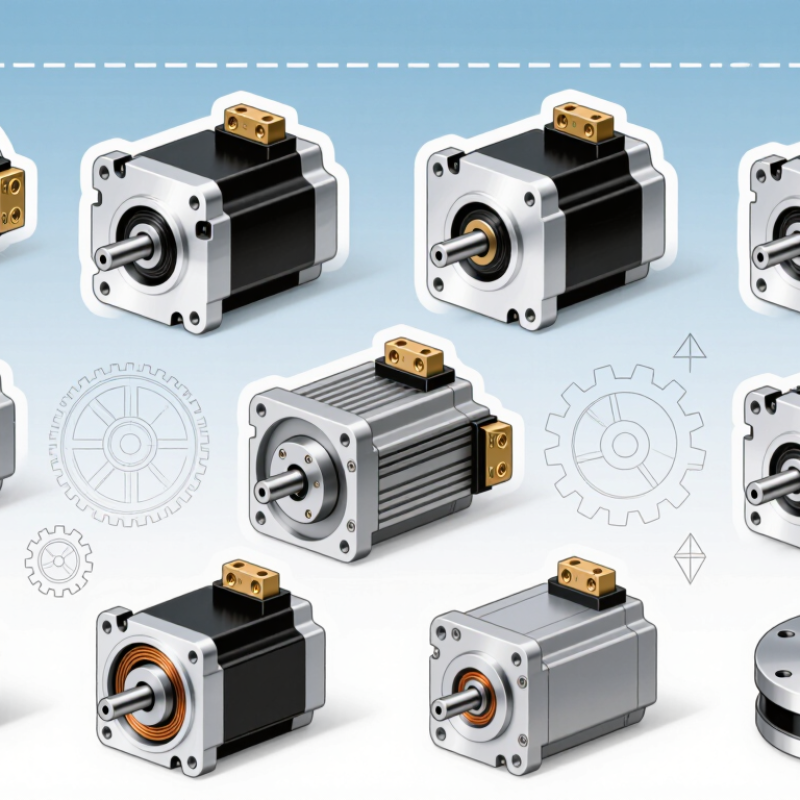
Top 10 Precision Motors Suppliers for Global Buyers

What Precision Motors Are and Where They Are Used

Precision motors are designed to control speed, torque, and position more consistently than general-purpose units. Their performance depends on the motor, drive electronics, feedback devices, and connected load working together. In servo systems, an encoder can report shaft position. Stepper motors often move in defined increments, though they can miss steps under excessive load. Precision is not one universal specification. Suppliers may describe it through speed stability, repeatability, or positioning error.

These motors appear in robotic joints, laboratory instruments, medical equipment, camera mechanisms, and automated production lines. A small motor may move a lens smoothly, while a larger unit positions a machine part against a measured stop. Requirements vary: a packaging system may need repeatable starts and stops, while a scientific instrument may need low vibration. Small errors matter. Heat, friction, mounting stiffness, and changing loads can all affect real-world performance. A datasheet helps, but it cannot predict every installation.

Tips: Match the motor to the actual load, speed range, and duty cycle—not just its rated torque. Check whether the application needs position feedback, and confirm that the drive supports it. Allow for heat and vibration in the mounting design. If possible, test the motor with the intended mechanism; bench results can differ. It is easy to overlook cable routing, too, and that detail deserves a second look.

How to Assess Precision Motor Suppliers for Global Sourcing

Assessing a precision motor supplier starts with the application, not the catalogue. Record required speed, torque, duty cycle, ambient temperature, and allowable shaft runout. Ask for test results at the operating point, not only peak ratings. The International Energy Agency has reported that motor-driven systems use about 45% of global electricity. That makes efficiency relevant, but it does not replace checks on accuracy, heat, and repeatability. Numbers matter.

Request documented tolerances, inspection methods, calibration records, and traceability for each production lot. For a sample motor, measure vibration and temperature after sustained operation; compare results with the supplier’s stated limits. The U.S. Department of Energy’s 2014 motor systems sourcebook estimates that motor-driven equipment uses roughly 69% of U.S. industrial electricity. A supplier’s efficiency claims deserve scrutiny. A caveat: published test figures may not reflect your real load profile. Review warranty terms, lead times, change-control procedures, and the supplier’s response to failure reports. Ask how deviations are contained and communicated. A polished datasheet helps, but consistent evidence across samples and production batches matters more.

Profiles of Ten Precision Motor Suppliers

The ten supplier profiles should be read through capability, not catalog size. They compare specialists in miniature coreless, brushless DC, frameless torque, servo, direct-drive, spindle, geared, slotless, linear, and custom low-voltage motors. For each, buyers should check continuous torque, speed range, dimensional tolerances, thermal limits, and test documentation. A compact motor may fit the drawing yet overheat inside a sealed assembly.

The International Energy Agency’s 2011 report, Energy-Efficiency Policy Opportunities for Electric Motor-Driven Systems, estimated that motor-driven systems use about 45% of global electricity. That scale makes efficiency maps and duty-cycle data more useful than a single peak-efficiency figure. Ask suppliers for measured performance at realistic loads, plus runout, vibration, and winding-temperature results. A catalog is not proof.

The profiles also distinguish production scale, engineering support, customization, and regional service capacity. These details matter when a prototype must become a repeatable production part. Public specifications can be uneven, and supplier claims are not always directly comparable. That is a limitation worth noting. Buyers should request the same test conditions from each shortlisted supplier before comparing quotes.

How Supplier Strengths Vary by Motor Type and Industry

Precision motor suppliers are not interchangeable. A supplier skilled in compact servo motors may offer less depth in direct-drive designs. Servo applications often depend on smooth low-speed motion, encoder accuracy, and stable torque. Stepper motors suit simpler positioning tasks, but resonance can affect performance. Small differences matter.

Robotics buyers may prioritize fast response and low backlash, while packaging lines need repeatable cycles and dependable heat management. Medical and laboratory equipment can demand quiet operation, compact dimensions, and careful traceability. Even within one industry, requirements vary. A centrifuge and a sample-handling arm do not stress motors in the same way. Ask suppliers for test conditions, not just peak ratings. Paper promises are easy.

Global buyers should compare thermal rise, vibration, service life, and production capacity using the same operating profile. Check whether test data reflects the intended load, speed, and ambient temperature. A supplier with strong engineering support can help adjust winding, feedback, or mounting choices before tooling is fixed. Still, published specifications rarely capture every installation issue. Cable routing, alignment, and heat trapped inside a housing can change results. A neat datasheet does not settle everything.

Top 10 Precision Motors Suppliers for Global Buyers - How Supplier Strengths Vary by Motor Type and Industry

A comparison of ten motor-specialist supplier profiles. This is a technology and sourcing guide, not a ranking of named companies.

Supplier Specialization Typical Motor Type Typical Strengths Common Industries and Uses Key Buyer Checks
Brushless motion specialists Brushless DC (BLDC) Electronic commutation, good speed control, and no brush wear in normal operation Robotics, medical equipment, cooling systems, and automated machinery Controller compatibility, feedback options, thermal limits, and performance across the operating-speed range
Servo-system specialists AC servo and servo motor assemblies Closed-loop position, speed, and torque control when paired with suitable feedback and a drive CNC equipment, packaging lines, factory automation, and industrial robots Encoder type, drive and network support, tuning requirements, overload rating, and system-level testing
Stepper-motor specialists Hybrid stepper Incremental movement and straightforward open-loop positioning in suitable applications Laboratory instruments, 3D printers, small automation systems, and positioning stages Required torque at speed, resonance behavior, driver settings, and whether position feedback is needed
Compact actuator specialists Brushed DC motor with gearbox Compact, practical speed reduction and increased output torque for intermittent or continuous-duty designs Instrument drives, access systems, small appliances, and mobile equipment Gear ratio, backlash, duty cycle, brush life, noise, and load-specific life testing
Miniature-motor specialists Coreless DC Low rotor inertia and responsive acceleration in compact designs; available performance depends on motor size and construction Portable medical devices, precision instruments, optical equipment, and small robotics Heat dissipation, operating life, commutation method, dimensional tolerances, and test data at the intended load
High-torque direct-drive specialists Frameless or direct-drive torque motor Direct rotary drive can eliminate a gearbox, avoiding gear backlash and transmission components Semiconductor equipment, rotary tables, precision positioning, and advanced robotics Continuous and peak torque, cooling, bearing and encoder integration, and installation alignment
Linear-motion specialists Linear motor Direct linear force without a rotary-to-linear transmission; suitable designs can support high acceleration and precise positioning Semiconductor fabrication, inspection systems, precision stages, and high-speed handling Stroke, force profile, heat management, guide system, position feedback, and protection from contamination
High-speed spindle specialists Precision spindle motor Designed for high rotational speed and controlled runout when properly specified and maintained Dental tools, micro-machining, PCB drilling, and precision grinding Maximum speed, runout measurement method, bearing life, balancing grade, cooling, and tool interface
Rugged industrial-motor specialists Industrial servo or brushless motor with environmental protection Options for demanding operating environments, including specified sealing, temperature, and vibration requirements Food processing, outdoor automation, material handling, and industrial machinery Ingress-protection rating, connector and cable sealing, temperature range, washdown compatibility, and applicable certifications
Application-integrated motion specialists Motor, gearbox, encoder, and drive combinations Integrated assemblies can simplify mechanical and electrical integration; performance depends on the selected components and system design Automated guided vehicles, laboratory automation, medical devices, and smart actuators Interface documentation, software support, replacement strategy, customization lead time, and system-level validation

Selection note: Motor performance varies by design, controller, load, cooling, and operating conditions. Compare suppliers using application-specific datasheets and test results rather than motor type alone.

How Global Buyers Can Compare and Select Suppliers

Comparing precision motor suppliers starts with the motion your equipment actually needs. Record required speed, torque, positioning accuracy, duty cycle, and installation space. Ask each supplier to state test conditions, not just headline performance figures. Numbers need context. A torque curve at operating temperature may reveal more than a catalog table. Check whether encoder resolution, control compatibility, and vibration limits suit your system.

Request a sample motor and a clear inspection record. Test it under your own load, then note temperature, noise, and repeatability over several cycles. Ask how production units are checked against the sample. Review how the supplier manages design changes, component substitutions, and failed-unit analysis. A polished data sheet is useful, but it cannot replace evidence from a real test.

Compare realistic lead times, minimum order quantities, spare-part availability, and technical response times. Written answers help. One awkward point: the lowest quote may exclude testing, cables, or custom mounting work. Compare total delivered cost instead. A spreadsheet can still miss practical friction, such as slow replies during a prototype change. Before committing to volume, agree on measurable acceptance criteria and run a small pilot order.

Top 10 Precision Motor Supplier Selection Criteria

This illustrative 100-point scorecard shows how global buyers might allocate evaluation weight across supplier-selection criteria. It is a comparison framework—not a ranking or verified score for any supplier. Adjust the weights to match your application.

FAQS

What information should I define before contacting suppliers?

Record required speed, torque, duty cycle, ambient temperature, and allowable shaft runout. Include the motor’s actual operating conditions.

What test results should I request?

Ask for measured performance at your operating point, not just peak ratings. Request vibration, temperature, and runout results under realistic loads. Peak figures tell only part of the story.

How can I check a sample motor?

Run it under sustained operating conditions, then measure vibration and temperature. Compare the results with the supplier’s stated limits. Keep your setup consistent.

What production records are useful?

Request documented tolerances, inspection methods, calibration records, and traceability for each production lot. Ask how deviations are contained and communicated.

How should I compare suppliers fairly?

Give each shortlisted supplier the same operating profile and request data under matching test conditions. Compare thermal rise, vibration, service life, and production capacity. The results may still have gaps.

Which motor type is right for my application?

Match the motor to the task. Servo motors can suit smooth, controlled motion; stepper motors can suit simpler positioning. Resonance may affect stepper performance.

What should robotics and packaging buyers consider?

Robotics applications may need fast response and low backlash. Packaging lines often depend on repeatable cycles and heat management. Details vary.

What can change motor performance after installation?

Cable routing, alignment, and heat trapped inside a housing can affect results. Ask about mounting and thermal limits before fixing the design. A datasheet cannot show everything.

Conclusion

Precision Motors are designed to deliver accurate, consistent motion in applications where speed, position, torque, or size must be carefully controlled. They are used across industries such as automation, medical equipment, robotics, aerospace, and consumer devices. This overview explains the main motor types and how their characteristics suit different operating environments and performance requirements.

For global sourcing, buyers should assess suppliers by technical expertise, product quality, customization options, production capacity, communication, and after-sales support. The supplier profiles highlight how strengths can vary by motor design, industry focus, and project needs. By comparing specifications, reliability, lead times, and total ownership costs against clear application requirements, buyers can create a practical shortlist and select a supplier that supports both current operations and future growth.

Liam

Liam

Liam is a dedicated marketing professional with a profound expertise in the industry, where he excels at highlighting the unique advantages of our core products. With a keen understanding of market trends and consumer needs, Liam frequently updates our company’s professional blog, providing......