Top 10 Types of Three Phase Motors for Global Buyers

Time:2026-09-17 Author:Sienna
0%

Global buyers rarely choose a three-phase motor by horsepower alone. The right selection depends on load behavior, voltage standards, duty cycles, enclosure design, and local service support. This guide examines the Top 10 Types of Three Phase Motors for Global Buyers, focusing on differences that matter on real equipment floors.

A conveyor may need steady torque at low speed, while a pump can strain a motor through repeated starts and poor alignment. An induction motor remains dependable in many factories because its construction is simple and serviceable. Synchronous, wound-rotor, brake, permanent-magnet, and variable-frequency-drive-ready designs offer different advantages. Each type also has trade-offs. None is universally best.

We compare operating principles, starting performance, efficiency, maintenance needs, control compatibility, and typical applications. The discussion also considers IEC and NEMA practices, nameplate details, insulation classes, ingress protection, and regional power conditions. These details are easy to overlook. They should not be.

From practical experience, a motor performing well in a clean 400-volt workshop may struggle in a humid coastal plant without suitable protection. A low purchase price can become expensive after downtime, rewinding, or unavailable spare parts. Buyers should verify certifications, technical documents, warranty terms, and authorized support before ordering. Specifications can look impressive. Field reliability matters more.

This guide is not perfect, because motor selection still depends on site measurements and qualified engineering review. Use it as a disciplined starting point, not a substitute for commissioning data, safety procedures, or local compliance checks.
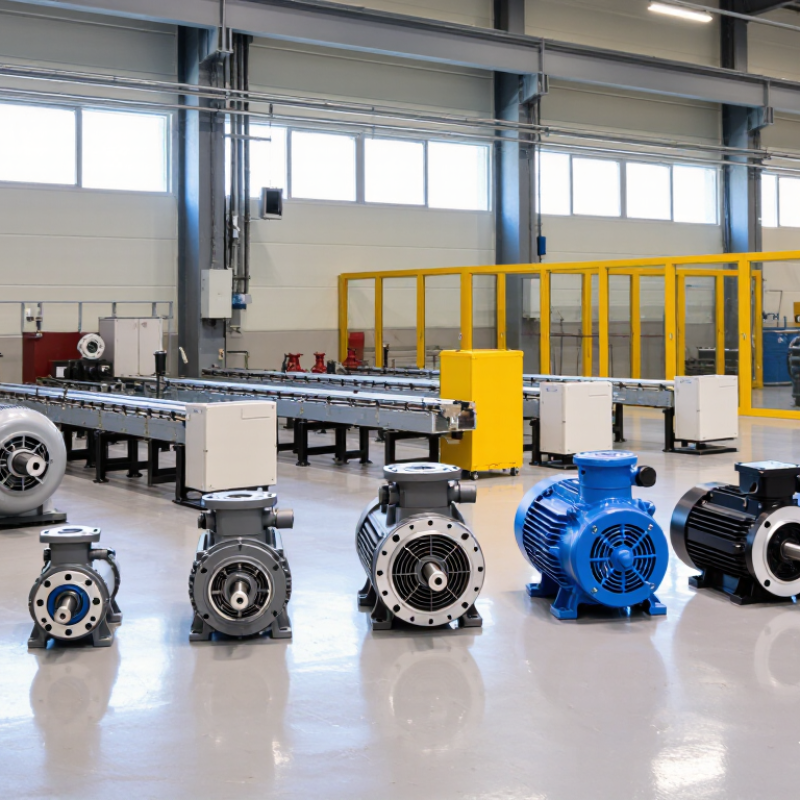
Top 10 Types of Three Phase Motors for Global Buyers

Three-Phase Motor Fundamentals and Classification

Three-phase motors convert electrical power into rotating torque through three currents separated by 120 degrees. This balanced supply creates a smooth rotating magnetic field and reduces vibration. The International Energy Agency reports that electric motor systems consume roughly half of global electricity. Industrial motor systems can represent about 70% of industrial electricity use. Classification therefore affects energy, maintenance, and operating cost.

The ten common types include squirrel-cage induction, wound-rotor induction, synchronous, permanent-magnet synchronous, synchronous reluctance, switched reluctance, brushless DC, servo, slip-ring, and dual-speed motors. These names describe rotor construction, excitation, or control method.

Induction motors are robust and economical. Permanent-magnet designs improve efficiency but require careful thermal and control planning. Synchronous reluctance motors avoid rotor magnets, yet their torque ripple may need attention. IEC 60034 standards provide key guidance for ratings, tests, efficiency, and performance. The U.S. Department of Energy also identifies motor-driven systems as a major industrial energy-saving opportunity.

Tips: Match motor type with load behavior, not only rated power. Check starting torque, duty cycle, ambient temperature, enclosure, speed control, and service factor. A conveyor may need high starting torque. A pump usually rewards stable speed and efficient throttling control. Field data can disagree with catalog assumptions. Cable length, harmonics, alignment, and poor cooling often change real performance. This is where many purchasing decisions become imperfect. Ask for test conditions and efficiency data at actual load points. A larger motor is not automatically safer or more efficient.

Ten Major Three-Phase Motor Types Explained

Ten Major Three-Phase Motor Types Explained

Three-phase motors convert electrical power into steady rotary motion for pumps, compressors, conveyors, and machine tools. The International Energy Agency estimates motor-driven systems consume 43–46% of global electricity and about 69% of industrial electricity. Efficiency is not a minor purchasing detail.

The ten major types include squirrel-cage induction, wound-rotor induction, slip-ring induction, synchronous, permanent-magnet synchronous, synchronous-reluctance, switched-reluctance, wound-field synchronous, doubly-fed induction, and linear three-phase motors.

Squirrel-cage models suit fans and pumps because they are rugged and economical. Wound-rotor designs provide higher starting torque. Synchronous motors maintain precise speed under changing loads.

Permanent-magnet versions can reduce losses, but magnets increase cost and supply-chain exposure. Reluctance motors avoid rotor magnets, although acoustic noise may require attention.

Doubly-fed motors fit variable-speed generation systems. Linear motors create direct motion instead of shaft rotation.

The categories are not perfectly uniform. Some manufacturers classify motors by rotor design, while others emphasize control method. That can confuse international buyers. U.S. Department of Energy guidance shows that motor efficiency depends on the complete system, including drives, transmission, and load profile.

A premium motor may waste energy if oversized or poorly controlled. Check voltage, frequency, enclosure rating, starting current, duty cycle, altitude, and ambient temperature. Measure the real load.

Assumptions often fail in dusty factories, where cooling passages become blocked.

Performance, Efficiency, and Application Comparison

Top 10 Types of Three Phase Motors for Global Buyers

Performance, Efficiency, and Application Comparison

Three-phase motors differ sharply in starting torque, speed stability, efficiency, and maintenance. Squirrel-cage induction motors suit pumps, fans, and conveyors because they are rugged and cost-effective. Wound-rotor induction motors deliver stronger starting torque for crushers, hoists, and loaded conveyors. Dual-cage induction motors balance starting performance with reliable running efficiency. Synchronous motors maintain constant speed and can improve power factor in large industrial systems.

Permanent-magnet synchronous motors provide excellent efficiency and compact size, especially in variable-speed compressors and precision machinery. Synchronous-reluctance motors reduce rotor losses and work well with modern drives. Switched-reluctance motors tolerate high temperatures, but their torque ripple and acoustic noise need careful control. Three-phase servo motors offer rapid acceleration, accurate positioning, and repeatable motion for robotics and packaging equipment.

Three-phase brushless motors support efficient, low-maintenance operation in fans, pumps, and light traction systems. Axial-flux permanent-magnet motors can reduce length and weight, which benefits compact machines. However, comparisons can become misleading. A motor’s rated efficiency may not reflect performance at partial load. A 7.5 kW pump running at 40% load needs different evaluation than a continuously loaded compressor. Check duty cycle, ambient temperature, starting method, insulation class, speed range, and drive compatibility. Installation quality matters too. Poor alignment or undersized cables can erase expected savings. The “best” motor is sometimes only the least unsuitable choice.

Global Standards, Ratings, and Installation Requirements

Selecting among ten three-phase motor types requires more than comparing power and price. Global buyers should verify the applicable standard, supply system, and installation environment. IEC 60034 commonly defines motor performance, testing, and efficiency classes, while NEMA MG 1 is widely used in North American projects. These systems are not identical. A 400 V, 50 Hz motor may not suit a 460 V, 60 Hz installation without checking speed, current, and temperature rise.

Ratings must match the real site. Record rated voltage, frequency, output power, service factor, duty cycle, insulation class, and efficiency class. IP55 may protect against dust and water jets, but it does not permit outdoor exposure without suitable drainage and corrosion protection. Consider altitude and ambient temperature, too. Above 1,000 meters, cooling performance can decline. Small details matter.

Installation quality often decides service life. Use correctly sized cables, protective devices, grounding conductors, and overload settings. Check shaft alignment with a dial indicator or laser tool. Maintain clear airflow around the cooling fan, especially on enclosed motors. Variable-speed applications may need an inverter-duty design, insulated bearings, or additional filtering. Follow local electrical codes and the motor’s certified documentation.

Do not trust the nameplate alone.

In practice, buyers sometimes overlook starting current or mounting dimensions. I have seen specifications that fit electrically but fail mechanically. The checklist is useful, but imperfect. Confirm every critical value with the installer, inspector, and motor supplier before shipment.

How Buyers Can Select the Right Three-Phase Motor

Selecting the right three-phase motor requires more than comparing the top ten motor types. Match motor behavior to the machine, site, and power supply. Start with load torque, rated speed, duty cycle, and expected starts per hour. A conveyor may need steady torque, while a compressor demands stronger starting performance. For pumps and fans, squirrel-cage induction motors often provide simple, durable operation. Synchronous motors can improve power factor when speed must remain stable. Wound-rotor and slip-ring designs suit demanding starts, but their maintenance burden is higher. Keep the application visible.

Check voltage, frequency, phase balance, mounting, shaft dimensions, and rotation direction before ordering. A motor rated for 400 V may not suit a 460 V installation without verification. Ask for service factor, insulation class, temperature rise, bearings, and thermal protection details. Dust, moisture, salt air, and washdown conditions determine the required enclosure and IP rating. For variable-speed drives, confirm inverter-duty insulation, cooling performance, and low-speed torque. This detail is often missed. Efficiency matters, but purchase price alone can mislead. Estimate annual running hours and electricity costs across the motor’s working life.

Global buyers should request test reports, material data, drawings, and traceable serial records. Compare recognized standards and local certification requirements, not only catalog claims. Lead time, spare bearings, repair skills, and warranty response also affect operating risk. I would leave room for doubt: calculated load data may be incomplete or optimistic. Measure the existing machine when possible, then verify assumptions with the installer. A slightly oversized motor may waste energy, while an undersized motor can overheat during starts. Choose with evidence.

FAQS

What is a three-phase motor?

It converts three electrical currents into rotating mechanical torque. The currents are separated by 120 degrees. This creates smooth rotation and reduced vibration.

Which three-phase motor suits pumps and fans?

A squirrel-cage induction motor often suits these applications. It is rugged, economical, and relatively simple to maintain. However, verify efficiency at the actual operating load.

When is a synchronous motor a better choice?

Choose one when stable speed matters under changing loads. It may also improve power factor in suitable systems. The result depends on correct sizing and control settings.

Why might permanent-magnet motors improve efficiency?

Permanent magnets reduce some rotor losses during operation. They can deliver high efficiency in compact equipment. Thermal management and control planning remain important.

What should buyers check before ordering a motor?

Check voltage, frequency, phase balance, speed, mounting, shaft dimensions, and rotation direction. Also review enclosure rating, insulation class, bearings, and thermal protection. Small omissions become expensive later.

How should motor selection match the machine?

Match motor behavior with load torque, starting demands, speed, and duty cycle. A conveyor may require steady torque and frequent starts. A compressor may need stronger starting performance.

Can a larger motor reduce operating problems?

Not automatically. An oversized motor may waste energy and operate inefficiently at light loads. An undersized motor may overheat during starts. Measure the real load.

What affects motor performance at an industrial site?

Dust, blocked cooling passages, cable length, harmonics, poor alignment, and high temperature can change performance. Catalog assumptions may fail in a dusty factory. Field measurements are imperfect, but useful.

Are motor classifications completely consistent?

No. Some classifications describe rotor construction, while others emphasize excitation or control methods. This can confuse international buyers. Request clear drawings and technical definitions.

What information should global buyers request?

Request test conditions, efficiency data, drawings, material details, and traceable serial records. Confirm local certification and installation requirements. Also consider spare bearings, repair skills, and response time. Purchase price is only one part.

Conclusion

This guide introduces the fundamentals and classification of Three Phase Motors, explaining how their three-phase electrical supply creates a rotating magnetic field for smooth, reliable, and efficient operation. It explores ten major motor types, including induction, synchronous, wound-rotor, permanent-magnet, and specialized designs, while outlining their structural features, control methods, strengths, and typical industrial applications. Readers will gain a clear understanding of how motor construction affects starting performance, speed regulation, torque, energy efficiency, maintenance needs, and operating costs.

The article also compares motor performance and efficiency across different working conditions, helping global buyers match motor characteristics with pumps, compressors, conveyors, fans, machine tools, and other equipment. It reviews important international standards, efficiency ratings, voltage and frequency requirements, protection levels, enclosure types, environmental conditions, installation practices, and safety considerations. Finally, it provides a practical selection framework based on load profile, power, speed, duty cycle, installation location, control requirements, compliance needs, and total lifecycle value.

Sienna

Sienna

Sienna is a skilled marketing professional with a deep expertise in our company’s core products and services. With a passion for innovation and detail, she plays a pivotal role in crafting insightful blog posts that not only highlight the unique features of our offerings but also provide valuable......