 Vortex Motor
Choosing the best DC Drives from China requires more than comparing prices on a supplier website. A reliable decision begins with the motor’s voltage, current, speed range, load profile, and braking needs. A 220-volt armature supply may suit one production line, yet fail under another machine’s starting torque. Small details matter.
Electrical drives author Austin Hughes states, “The function of an electrical drive is to control the speed, torque, and position of an electric motor.” This principle remains practical when evaluating Chinese manufacturers. Look for clear parameter sheets, stable speed regulation, adjustable current limits, and documented protection against overload, overvoltage, and overheating. A serious supplier should explain its testing process, not merely display attractive product photographs. Factory inspection records, traceable components, and responsive engineering support add real credibility.
The strongest DC Drives suppliers usually serve demanding applications, including cranes, steel equipment, printing machines, elevators, and older industrial systems. Ask whether the drive supports regenerative braking, encoder feedback, field weakening, and replacement compatibility. Request a sample wiring diagram. Then examine the terminal layout and cooling method. These physical details often reveal more than marketing language.
Still, no ranking is perfect. Some suppliers publish incomplete efficiency data, while buyers sometimes overlook installation quality. That weakens otherwise capable equipment. China offers technically mature manufacturers, but quality varies between factories and product lines. This guide compares practical performance, documentation, customization, certification, delivery reliability, and after-sales support. The goal is not to praise every supplier. It is to identify choices that remain dependable when the motor starts repeatedly, the cabinet heats up, and production cannot wait.
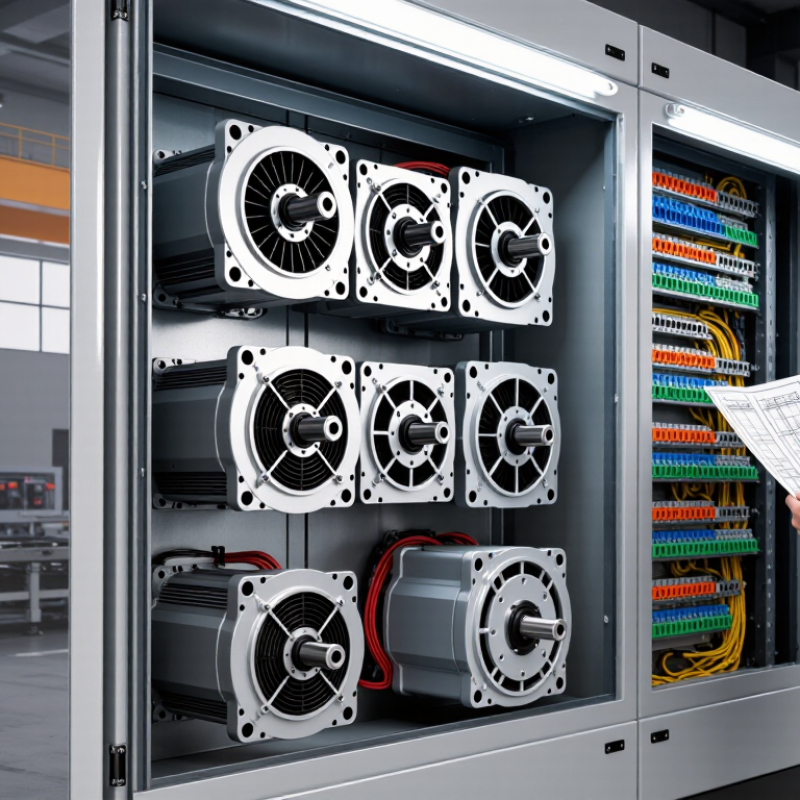
A DC drive controls the speed, torque, and direction of a direct-current motor. It adjusts electrical power before that power reaches the motor. In many industrial cabinets, incoming AC passes through a rectifier and becomes controlled DC. The drive then regulates armature voltage and current. Higher armature voltage usually increases speed. More armature current produces more torque. That matters.
Inside the system, feedback devices report speed or current to the controller. The controller compares those signals with the operator’s settings. It then changes the firing angle, switching pattern, or output voltage. A well-tuned drive can move a conveyor smoothly, even during heavy starting loads. Some units also support regenerative braking and four-quadrant operation. These functions need careful motor and load matching.
When assessing DC drives manufactured in China, engineers should examine test records, insulation ratings, overload capacity, cooling design, and control accuracy. A practical inspection should include terminal labeling, enclosure quality, fault history, and behavior under low-speed load. Thermal derating is easy to overlook, especially inside a warm cabinet. Not always. A polished datasheet cannot replace documented testing and responsive technical support. This explanation is simplified, because motor fields, feedback loops, and braking circuits can vary significantly between applications. Engineers should verify each parameter against the motor plate, wiring diagram, and applicable electrical requirements before commissioning.
The following table summarizes common DC drive configurations manufactured for industrial applications in China. Values are typical engineering ranges rather than specifications for one particular supplier. A DC drive regulates motor speed and torque by controlling armature voltage, armature current, and, where applicable, field current.
| DC Drive Configuration | Typical Electrical Range | How It Works | Speed and Torque Capability | Regenerative Braking | Common Protection Functions | Typical Applications | Selection Considerations |
|---|---|---|---|---|---|---|---|
| Single-Quadrant Thyristor Drive | AC input: approximately 220–690 V DC output: commonly up to 500–750 V Armature current: approximately 5–2,000 A |
A controlled silicon rectifier varies the average DC voltage supplied to the motor armature. The firing angle of the thyristors determines the output voltage. | Good constant-torque operation below base speed. Speed regulation is typically around ±1% with standard feedback and can improve with tachometer or encoder feedback. | No regenerative braking. The motor normally operates in the forward motoring quadrant. | Overcurrent, overvoltage, field-loss, motor-overtemperature, phase-loss, stall, and thyristor-fault protection. | Conveyors, pumps, fans, simple production machinery, and retrofit projects where controlled acceleration is required. | Suitable when the motor runs mainly in one direction and braking energy does not need to return to the supply. |
| Two-Quadrant DC Drive | AC input: approximately 220–690 V Armature current: approximately 10–2,000 A DC motor voltage selected to match the motor rating |
Separate controlled rectifier paths allow motoring in one direction and electrical braking in the opposite torque direction without changing the motor connections. | Provides controlled acceleration, deceleration, and braking with strong low-speed torque when current feedback is correctly tuned. | Can return braking energy to the AC supply in a suitable regenerative configuration; otherwise a braking resistor or mechanical brake may be required. | Armature overcurrent, field-loss, overspeed, thermal overload, feedback failure, phase-loss, and overtemperature protection. | Reversing conveyors, elevators, unwind stands, hoists, and machines requiring frequent deceleration. | Choose this configuration when controlled braking is needed but full forward-and-reverse torque operation is not necessary. |
| Four-Quadrant Regenerative Thyristor Drive | AC input: approximately 380–690 V DC motor voltage: commonly 220–750 V Armature current: approximately 25–3,000 A |
Two fully controlled converter bridges control both the direction of armature voltage and the direction of current, allowing motoring and braking in both rotational directions. | High dynamic response, full-speed reversing, and controlled torque through all four operating quadrants. | Yes. Kinetic energy generated during braking can be converted back into electrical energy and returned to the AC network. | Includes converter overcurrent, commutation fault, field-loss, overspeed, motor overtemperature, phase-loss, and regenerative overvoltage protection. | Rolling mills, test benches, cranes, elevators, centrifuges, winches, and reversible industrial lines. | Best for frequent reversing or braking. The incoming supply must support regeneration, and the system requires correct phase sequence and harmonic considerations. |
| PWM Chopper DC Drive | DC input: approximately 24–96 V for mobile systems; higher-voltage industrial versions are also available Current: approximately 10–1,000 A |
A high-frequency power switch rapidly turns DC power on and off. The duty cycle controls the average motor voltage, while current feedback controls torque. | Good efficiency and smooth low-speed control. Speed regulation commonly ranges from about ±1% to ±3%, depending on feedback and load conditions. | Optional regenerative braking is available when the battery or DC bus can accept returned energy. | Short-circuit, overcurrent, undervoltage, overvoltage, thermal, stall, reverse-polarity, and battery-temperature protection. | Electric vehicles, warehouse equipment, battery-powered machines, mobile platforms, and compact automation systems. | Confirm battery voltage, peak current, motor inductance, cooling method, electromagnetic compatibility, and braking-energy handling. |
| Digital Closed-Loop DC Drive | AC input: approximately 220–690 V Armature current: approximately 5–3,000 A Field current: commonly 1–100 A |
A digital controller compares the commanded speed with feedback from a tachometer or encoder and adjusts armature voltage and current through a power converter. | Typical speed regulation is approximately ±0.1% to ±0.5% with suitable feedback. Current-loop response is fast enough for demanding torque-control applications. | Available in two-quadrant and four-quadrant versions, depending on the converter topology. | Electronic overload, field-loss, encoder or tachometer failure, overspeed, thermal, communication, phase-loss, and converter-fault protection. | Printing lines, wire drawing, extrusion, paper machines, metal processing, and synchronized production equipment. | Recommended when precise speed matching, repeatable acceleration, diagnostics, parameter storage, and PLC integration are important. |
| Field-Weakening DC Drive | Motor armature voltage is maintained near its rated value while field current is reduced above base speed. Typical constant-power speed range: approximately 1:2 to 1:5, depending on the motor. |
Below base speed, armature voltage controls speed. Above base speed, the drive reduces field current to increase speed while limiting motor power and armature voltage. | Provides constant torque below base speed and approximately constant power above base speed. Torque decreases as speed increases in the field-weakening region. | Depends on the armature converter; regenerative braking requires a two-quadrant or four-quadrant power section. | Field overcurrent, field-loss, overspeed, armature overcurrent, thermal overload, and voltage-limit protection. | Machine tools, winders, unwinders, rolling equipment, and applications requiring a wide speed range. | Verify the motor’s allowable overspeed, field-current range, commutation capability, cooling, and mechanical balance before operation above base speed. |
| Industrial DC Drive with PLC or Fieldbus Integration | Power ratings commonly range from less than 1 kW to several megawatts, depending on the converter and motor system. Communication may use industrial Ethernet, RS-485, or other fieldbus interfaces. |
The power stage regulates motor voltage and current, while a PLC, motion controller, or supervisory system sends speed, torque, start/stop, and diagnostic commands. | Performance depends on the feedback device, control loop tuning, network update time, and motor inertia. Closed-loop systems offer the most consistent regulation. | Available with non-regenerative, braking-resistor, or regenerative power sections. | Drive alarms, emergency-stop input, safe disable functions where supported, motor thermal input, communication timeout, and fault-history recording. | Automated production lines, process plants, centralized control rooms, and equipment requiring remote diagnostics. | Check protocol compatibility, response time, cybersecurity requirements, cabinet temperature, spare-part availability, and commissioning support. |
Practical selection rule: Match the drive to the motor’s rated armature voltage, continuous and peak armature current, field voltage and current, required speed range, braking method, feedback type, enclosure and cooling conditions, supply harmonics, and control-system interface. The actual rating should be confirmed from the motor nameplate and the manufacturer’s technical documentation.
Brushed DC drives remain common for simple factory systems. Regenerative drives return braking energy to the power supply. Four-quadrant drives support forward motion, reverse motion, and powered braking. Digital and analog versions serve different control needs.
It suits machines that slow down often. Winding equipment and lifting systems are typical examples. Braking energy returns to the electrical system. Confirm the motor, resistor, and power system match correctly.
It controls forward and reverse operation. It also supports powered braking during direction changes. Rolling equipment and positioning machines may need this flexibility. The application must tolerate frequent current changes.
Digital drives provide settings, fault records, and communication ports. Some accept encoder feedback for closer speed control. Analog drives may be easier to repair in older equipment. Their adjustment range can be narrower.
Check motor voltage, rated current, overload demand, and braking needs. A small workshop may require a compact single-phase unit. A heavy process may need a cabinet-mounted, forced-cooled system. Catalog figures are not always realistic.
Request load curves, wiring diagrams, thermal records, and test reports. Confirm local voltage and control-signal compatibility. Ask about overcurrent, overspeed, and overheating protection. Clarify every unclear terminal.
Review factory testing, component traceability, calibration records, and failure data. Request a sample before approving a larger order. Measure output ripple, braking response, and cabinet temperature. Paperwork alone is weak evidence.
Check spare-part availability, firmware access, remote troubleshooting, and response times. Review warranty limits carefully. Ask about export experience and comparable installations. References can be selective, unfortunately.
It is especially useful for high-inertia equipment and frequent starting. Inspectors can check wiring, cooling, protection functions, and test results. A low price may hide long commissioning delays. I would not treat inspection as perfect, either.
DC Drives are electronic control devices used to regulate the speed, torque, and direction of DC motors. By adjusting the voltage or current supplied to the motor, they help equipment operate more smoothly, efficiently, and safely. Chinese manufacturers offer a wide range of DC Drives for industrial machinery, conveyors, automation systems, lifting equipment, and other applications. Their products may include basic analog drives, digital drives, regenerative models, and solutions designed for different voltage and power requirements.
When choosing a DC drive from China, buyers should evaluate product quality, control accuracy, protection functions, operating temperature range, documentation, customization capability, and after-sales support. It is also important to confirm compatibility with the motor, load characteristics, power supply, installation environment, and communication system. The best choice is not simply the lowest-cost option, but a reliable DC Drives solution that matches the application’s technical demands, safety expectations, maintenance needs, and long-term operating goals.
